
Why Newcastle Homeowners Choose Timber Over Metal for Gazebo Construction
Timber gazebo construction consistently comes out on top for Newcastle homeowners who want a garden structure that does more than just occupy space. Metal frame gazebos have their place — they’re quick to assemble and straightforward in their application — but they don’t age the same way, and they don’t carry the same presence in a well-considered garden.
What timber delivers that metal simply doesn’t is character. The grain of a spotted gum post, the depth of a hardwood beam, the way a well-oiled blackbutt frame catches the afternoon light in a Merewether or Hamilton garden — these are qualities that compound over time rather than diminish. Newcastle’s outdoor lifestyle also demands a structure that genuinely performs in coastal humidity and salt-laden air, and correctly specified hardwood or treated pine handles those conditions exceptionally well.
For homeowners who’ve invested in their garden and want a gazebo that reflects that investment, timber construction is the material that consistently justifies the decision years down the track.

Timber Species for Gazebo Construction in Newcastle
Timber species selection is one of the first decisions that shapes how your gazebo performs and looks over the long term. In the Hunter Region, hardwood species are the premium choice for feature gazebos where aesthetics are the priority. Spotted gum, blackbutt, and ironbark are the most commonly specified hardwoods for outdoor structures in this area — dense, naturally durable, and resistant to decay and insect attack without relying entirely on chemical treatment. That natural resilience makes them particularly well suited to Newcastle’s coastal humidity and the exposed conditions a garden gazebo typically occupies year-round.
Treated pine is the practical alternative and a legitimate one. Cost-effective, structurally sound, and widely available, treated pine performs well outdoors when correctly specified and maintained. It’s not simply a budget compromise — plenty of well-built gazebos across Newcastle are framed in treated pine and holding up decades later. The key is correct treatment rating for the application, which we cover in the next section.
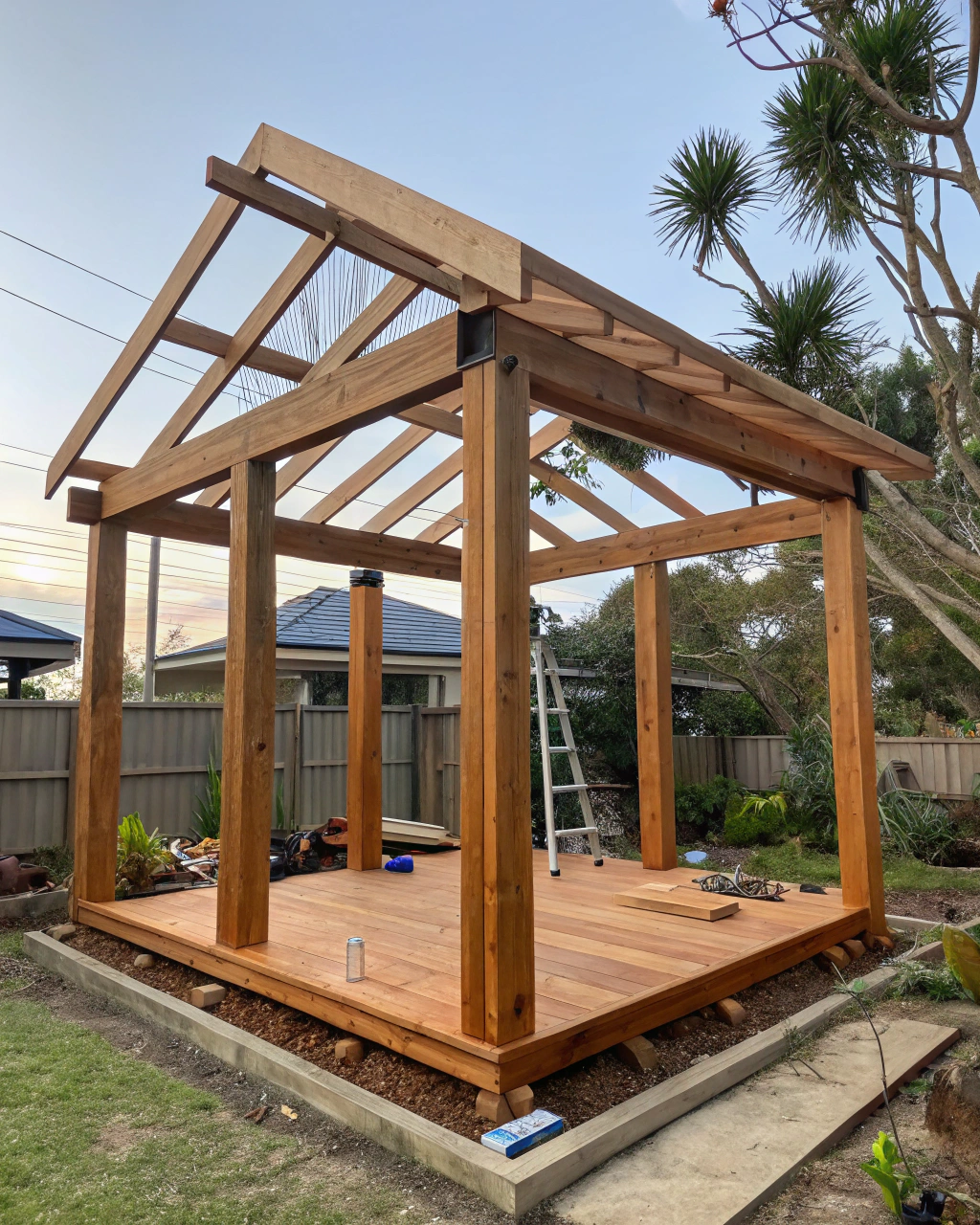
Hardwood vs Treated Pine — Which Timber is Right for Your Gazebo?
Both are legitimate choices for gazebo construction in Newcastle — the right call depends on your budget, your aesthetic priorities, and how the structure sits in the garden.
| Hardwood | Treated Pine | |
|---|---|---|
| Species | Spotted gum, blackbutt, ironbark | MGP10 / MGP12 structural pine |
| Durability | Naturally high — resists decay & insects | Good when correctly specified & maintained |
| Aesthetics | Rich grain, premium finish, ages beautifully | Clean, consistent appearance, takes stain well |
| Cost | Higher upfront investment | More cost-effective |
| Best for | Feature gazebos, coastal & exposed positions | Solid everyday builds, painted or stained finishes |
| Maintenance | Periodic oiling or staining | Regular re-staining or painting |
Hardwood is the right choice when the gazebo is a genuine feature of the garden and you want a structure that deepens in character over time. Treated pine delivers a structurally sound, attractive result at a lower price point — and when finished correctly, the two aren’t far apart visually.
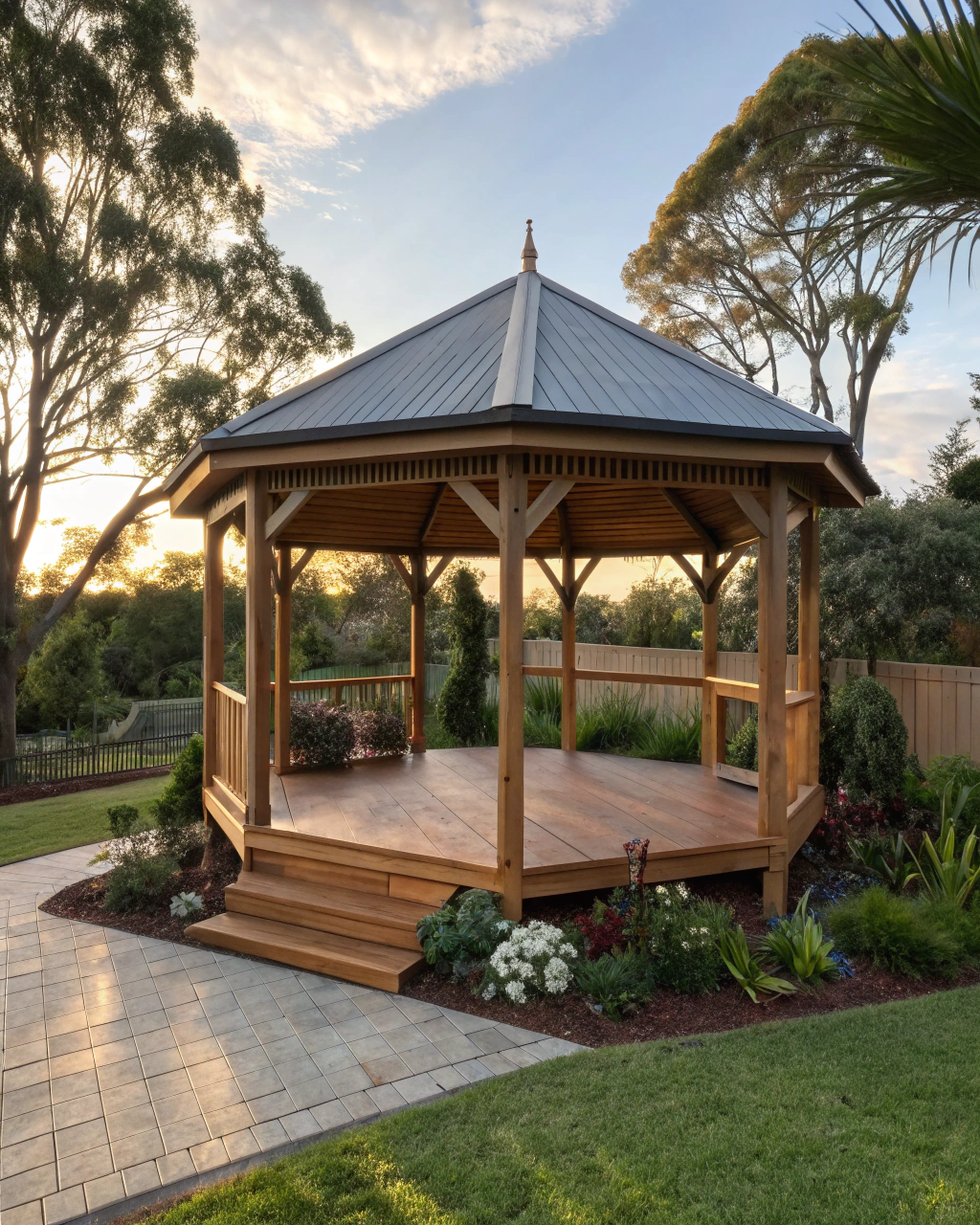
Roof Framing Options — Hip, Gable, and Octagonal Gazebo Roofs
Roof framing is where the character of a timber gazebo really takes shape. Each configuration requires a different structural approach and produces a distinctly different finished look — getting this decision right early shapes everything from the timber sizing through to the roofing material selection.
Hip roofs suit rectangular gazebo footprints and deliver a clean, symmetrical profile that integrates well with most Newcastle homes. All four sides slope to the eaves, creating a compact overhead structure that handles weather well.
Gable roofs introduce a ridge line and two triangular end faces, giving the gazebo a more traditional building character. They suit longer rectangular structures and work particularly well where the gazebo connects to the home.
Octagonal roofs are the classic gazebo configuration — eight rafters meeting at a central hub, creating the distinctive profile most people picture when they think of a traditional garden gazebo. Each framing system is detailed at the ridge and eaves to manage weather and maintain a clean, crafted finish.
Structural Design Elements of a Timber Gazebo
Structural design is where a timber gazebo either earns its longevity or starts to show its weaknesses. Every element of the frame carries load, and the sizing decisions made at the design stage determine how the finished structure performs over decades of Newcastle weather.
Posts carry the full roof load down to the footings. Section size is determined by the span, the roof weight above, and the height of the structure — undersized posts compromise the entire build.
- 90x90mm suits lighter, smaller garden gazebos
- 140x140mm or 190x190mm are standard for full-sized feature structures
- Hardwood posts can run leaner than treated pine at equivalent loads
Beams and rafters do the heavy lifting between posts and across the roof plane. Heavier section timbers create a more substantial, crafted look — lighter sections suit more delicate garden structures where visual weight matters.
Connection hardware — post bases, joist hangers, and structural brackets — needs to be correctly specified and installed. Undersized or poorly fixed connectors are where timber gazebo frames fail first, and it’s an area our team takes seriously from the outset on every Newcastle gazebo build.
Roofing Materials for Timber Gazebos — Colorbond, Polycarbonate, Shingles & Thatch
The roof covering sits above the timber frame and significantly affects both the performance and the character of the finished structure. Each option interacts differently with the timber frame below in terms of load, fixing, and visual compatibility.
Colorbond roofing suits homeowners who want full weather protection and a low-maintenance finish. It’s the most practical choice for a gazebo used as a genuine outdoor room year-round in Newcastle’s climate.
Timber shingles deliver the most authentically crafted aesthetic for a traditional timber gazebo. They require more maintenance over time, but suit homeowners who want the roofing to match the character of the frame below.
Polycarbonate panels suit applications where natural light through the roof matters — a gazebo positioned over a garden planting area or a seating zone where brightness is a priority.
Thatch roofing creates a resort or tropical aesthetic that suits certain garden styles across the Newcastle region — particularly in properties with established subtropical planting and entertaining areas.
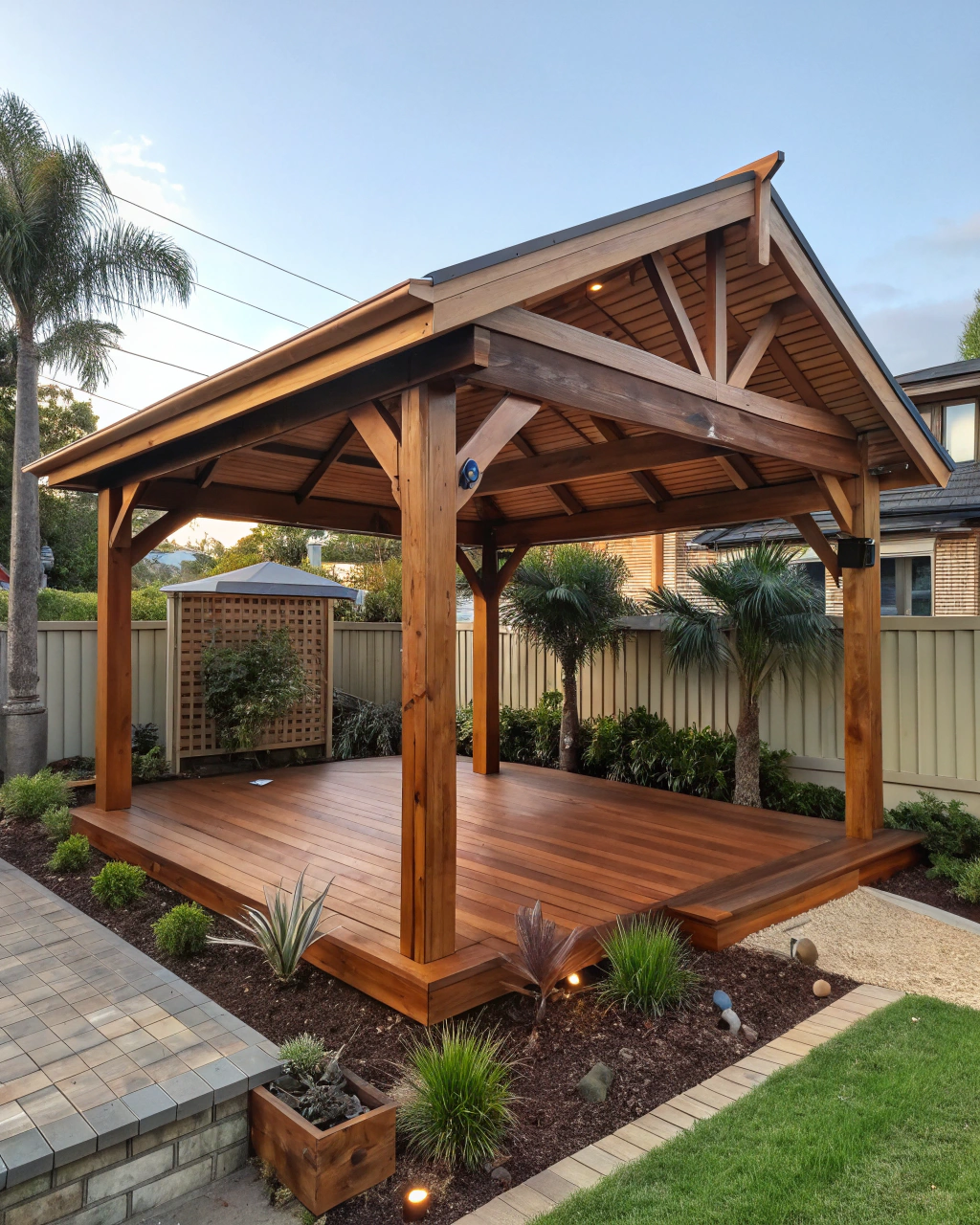
Timber Gazebo Finishing Options — Oils, Stains, and Paint
Timber gazebo finishing is the final decision that determines how the structure sits in the garden and how well it holds up over time. The right finish depends on the timber species, the aesthetic you’re after, and how much maintenance you’re prepared to commit to.
Natural oil finishes are the most popular choice for hardwood builds across Newcastle. They enhance and preserve the timber’s colour, maintain the grain’s full visibility, and give spotted gum or blackbutt that deep, rich tone that makes the structure a genuine garden feature.
Stains shift the colour tone while keeping the grain readable — useful for homeowners who want the gazebo to integrate with a specific palette in the garden without losing the character of the timber beneath.
Paint finishes suit properties where the gazebo needs to match the home’s existing exterior colour scheme. Coverage is full, and the finish is clean — though the grain disappears beneath it entirely.
Post Sizing, Beam Profiles, and Rafter Spans
Post sizing, beam profiles, and rafter spans are the three structural variables that determine how a timber gazebo performs under load and how it reads visually once it’s standing. Getting these proportions right is as much about craftsmanship as it is about engineering.
Posts need to be sized for the roof load above and the height of the structure. A full-sized feature gazebo with a Colorbond or tiled roof demands a heavier post section than a lightweight polycarbonate-roofed garden structure — and the difference shows in both the structural performance and the finished visual weight of the build.
Beam profiles connect the posts and carry the rafter loads across the span. Deeper beams handle longer spans without deflection — and in hardwood species like blackbutt or spotted gum, a well-proportioned beam becomes a genuine feature of the gazebo rather than simply a structural necessity.
Rafter spans across the roof plane determine spacing and section size. Tighter rafter spacing with heavier sections creates the shadow line detail that gives a quality timber gazebo its crafted character — particularly noticeable in the Hunter Region’s afternoon light where those lines really show.
Frequently Asked Questions — Timber Gazebo Construction Newcastle
Spotted gum, blackbutt, and ironbark are the strongest choices for Newcastle conditions. All three are naturally durable, resist coastal humidity well, and deliver a premium finish that improves with age. Treated pine is a solid, cost-effective alternative when correctly specified and maintained.
A correctly built and maintained timber gazebo will last 25 to 40 years in Newcastle conditions. Hardwood species will outperform treated pine over the long term, particularly in exposed coastal positions. Regular re-oiling or re-staining every two to three years is the primary maintenance commitment.
H3 treatment is rated for above-ground outdoor exposure — framing, rafters, and beams that don’t contact the ground. H4 is rated for ground contact applications — posts set directly into soil or concrete footings. Using the correct treatment rating for each application is non-negotiable for long-term performance.
Colorbond is the most practical choice for year-round weather protection with minimal maintenance. Timber shingles suit homeowners who want an authentically crafted aesthetic but require more upkeep. Polycarbonate suits light-filled garden positions. Thatch creates a tropical resort character that works well in certain Newcastle garden styles.
Natural oil finishes enhance and preserve the timber’s colour while maintaining the grain’s visibility — the most popular choice for hardwood builds. Stains shift the tone while keeping the grain readable. Paint finishes suit homeowners integrating the gazebo into a specific colour palette. Re-application every two to three years keeps the timber protected.
Get a Free Timber Gazebo Quote in Newcastle and the Hunter Region
If you’ve been thinking about a timber gazebo for your outdoor space, this is the right time to have a conversation. Our team works across Newcastle and the Hunter Region — from coastal properties in Merewether and Bar Beach through to established gardens in Hamilton, Adamstown, and the western suburbs — and we bring genuine timber construction expertise to every project we take on.
We’re not a shed kit company that happens to build gazebos. Timber is what we do — from species selection and structural design through to surface finish and ongoing maintenance advice. Every build is designed for the specific site, the specific garden, and the homeowner who’s going to be using it for the next twenty years.
Get in touch today for a free design consultation and quote. We’ll come to your property, look at the space properly, talk through your options in timber, and give you a clear, honest price with no vague estimates and no surprises on the day.
Call us or fill in the quote form — we’ll get back to you fast.