
Two Vehicles, One Proper Solution
A single carport was never designed for the way most Newcastle households actually live. Two cars, a car and a boat, a ute and a caravan — the list of assets sitting exposed on driveways across Newcastle because the existing covered space doesn’t stretch far enough is a long one.
A double carport solves that in one build. Both vehicles are under cover, both are protected from the salt air and UV that does real damage to paintwork and interiors over time, and a finished structure on the property that adds value rather than visual clutter.
The difference between a double carport that looks like it belongs and one that looks like an afterthought comes down to how it’s designed — roof pitch matched to the existing dwelling, materials selected for the site and the climate, and a layout that works with the block rather than against it.
That’s what we build across Newcastle and the Hunter Region, and we’ll come out and assess your site before we draw a single line.

Double Carport Designs That Suit Newcastle Homes
Newcastle’s housing stock isn’t uniform. You’ve got Californian bungalows in Hamilton, double-brick seventies homes in Kotara and Charlestown, fibro cottages in Mayfield and Waratah, and newer builds spread through Wallsend and Fletcher. Each has its own roofline, its own material palette, and its own street presence — and a double carport that looks right on one will look completely wrong bolted onto another.
This is where design matters as much as construction. Roof pitch, fascia profile, post sizing, and colour selection all contribute to whether the finished structure reads as a natural extension of the home or an obvious addition that drags the street appeal down.
We look at the existing dwelling before we draw anything. The goal is a double carport that a visitor wouldn’t immediately clock as something that wasn’t part of the original build — proportionate, well-detailed, and finished in colours that complement rather than compete.
Colorbond’s range covers most of what Newcastle homes need, and where timber framing suits the character of an older home, we work with that too. The structure should belong. That’s the standard we build to.
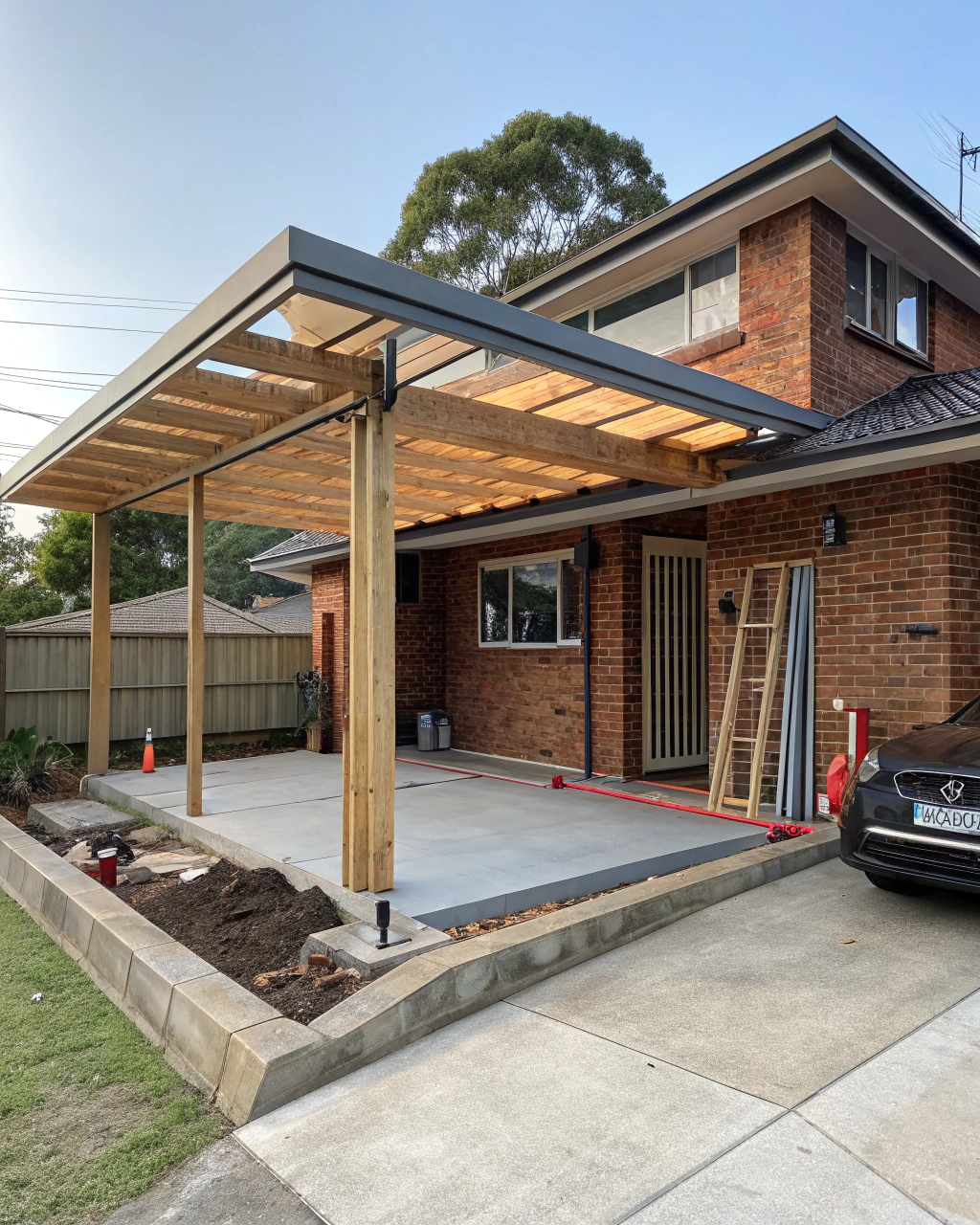
Guttering and Drainage on Double Carports
A double carport roof collects a lot of water during a Newcastle downpour — and that water has to go somewhere deliberate, not wherever gravity takes it.
Guttering on a double carport isn’t optional. Without it, rainwater runs off the edge of the roof in sheets, eroding the ground at the base of the structure, pooling against the house wall on attached configurations, and creating a waterfall effect every time it rains that makes the covered space practically unusable.
What good drainage design covers a double carport:
- Gutter sizing — a wider roof span means higher water volume, and gutters need to be sized accordingly to handle peak flow without overflowing
- Downpipe placement — positioned to direct water away from footings, boundary fences, and the dwelling itself
- Connection to stormwater — where the site requires it, downpipes tie into the existing stormwater system rather than discharging onto the ground
- Slope and fall — gutters installed with the correct fall so water moves toward the downpipe rather than sitting and causing rust or overflow
We factor drainage into the design from the start, not as a detail sorted out on installation day.
Double Carport Configuration Options
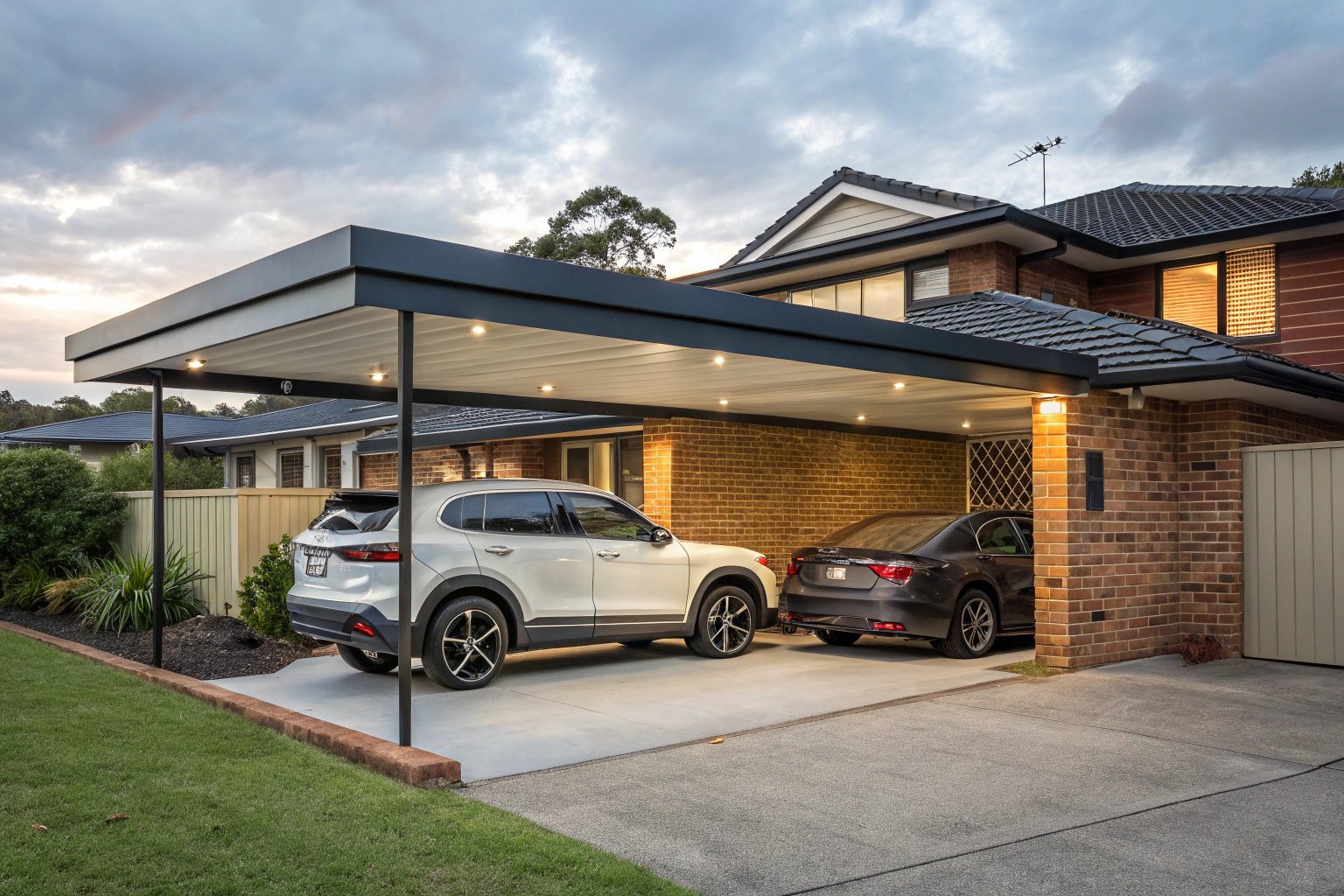
Side-by-Side Double Carports
The most common layout — two bays positioned next to each other under a single roof span, with each vehicle pulling in and out independently. This configuration suits wider blocks where the driveway has the width to accommodate two cars side by side. It’s the preferred choice for households where both vehicles need to come and go at different times without one blocking the other.
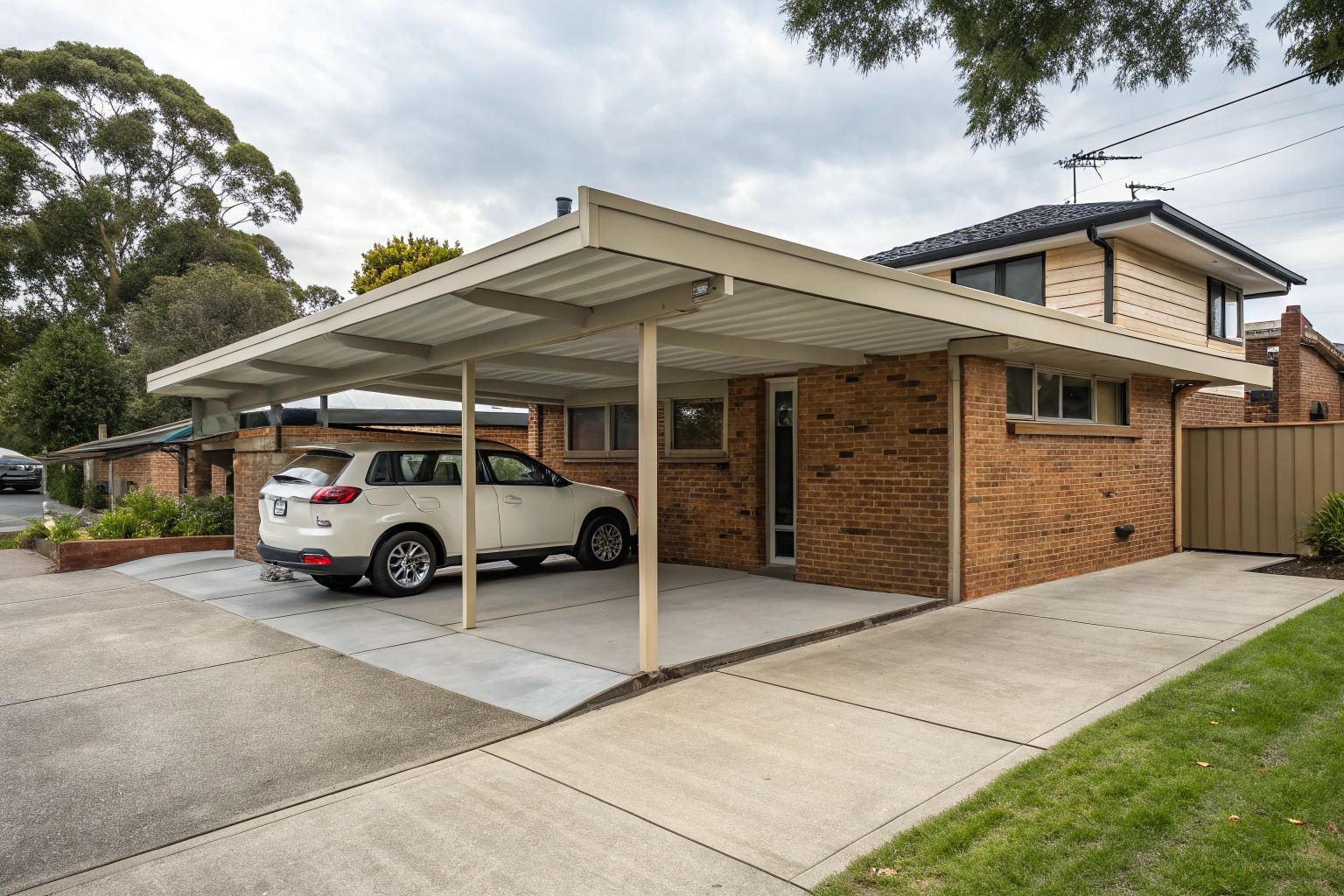
Tandem Double Carports
Tandem layouts run one bay behind the other, which suits narrower sites where width is constrained but depth is available. It’s a practical solution for older Newcastle lots with tight frontages, particularly in suburbs like Hamilton, Islington, and Waratah where block widths don’t always allow a side-by-side span. The trade-off is access — one vehicle will always need to move for the other to exit.
Why the Junction Between Structure and Home Matters
Attaching a double carport to your home creates a connection point that has to be done properly — because if it isn’t, water finds its way in. It’s one of the most common sources of long-term damage to poorly built attached structures, and it’s almost always invisible until the problem is well established inside the wall.
A properly executed junction addresses three things:
- Weatherproofing — flashing, sealing, and water direction have to be designed so that rain that hits the roof of the carport is directed away from the wall junction, not into it
- Structural tie-in — the new structure needs to be connected to the existing dwelling in a way that handles load transfer and movement without stressing the original building fabric
- Visual integration — the connection point should be clean and finished, not a visible gap between two structures that were designed independently
This is work that rewards experience. A builder who’s done it properly across dozens of Newcastle homes knows where it goes wrong and designs around those failure points from the start. Low-cost approaches tend to show themselves here first.
Roofing Options for Your Double Carport
The roof is the part of the structure that does the actual work, and for a double carport, getting the material right matters more than it does on a smaller span.
Colorbond steel sheeting is the go-to for most double carport applications across Newcastle. It’s durable, low maintenance, handles coastal salt air well, comes in a wide range of colours that match or complement most Australian roofing profiles, and performs reliably across the UV and weather exposure a carport roof takes every year. For the majority of homes, it’s the right call.
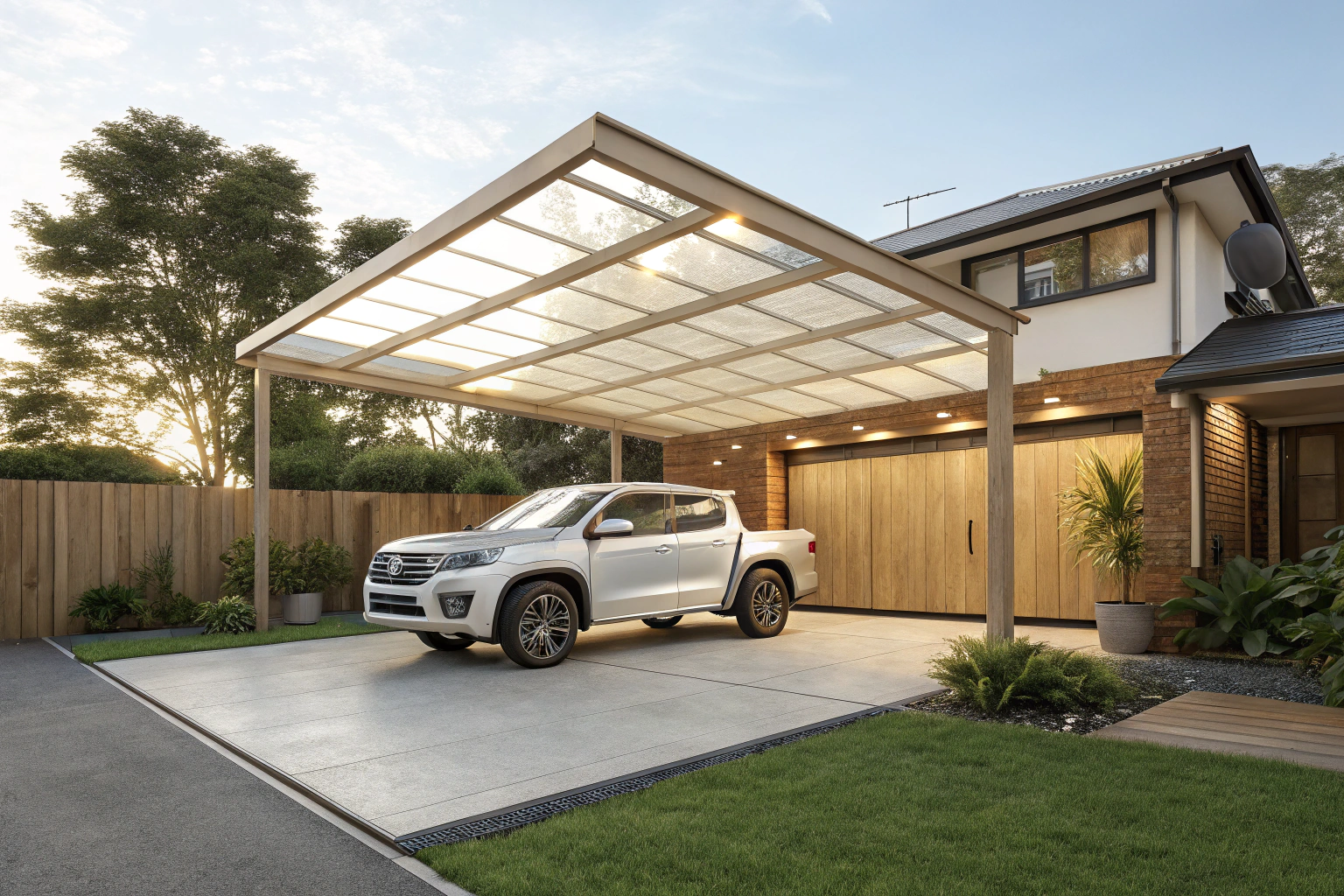
Polycarbonate roofing panels suit homeowners who want natural light filtering into the covered area — particularly useful where the carport sits alongside or partially covers an outdoor space that would otherwise feel closed off. Modern polycarbonate panels handle UV reasonably well and have improved significantly from earlier generations, though they do require more maintenance attention over time than Colorbond.
In some cases, a combination of both materials works well — Colorbond over the main parking area with a polycarbonate section along one edge to bring light in without compromising weather protection where it counts most.
We recommend based on your site, your home, and how the space will actually be used.
Double Carports for Boats, Caravans and Trailers
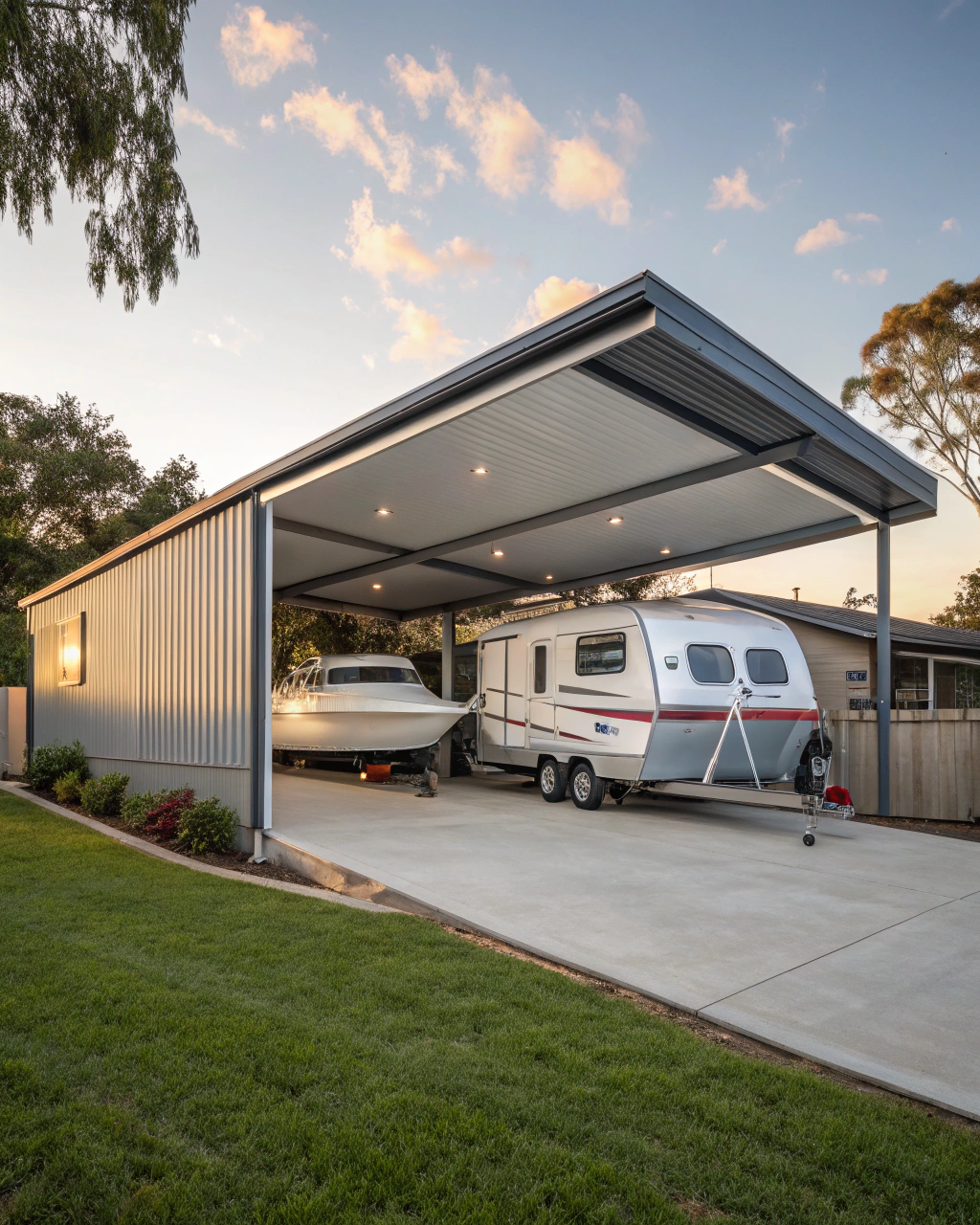
A double carport isn’t always about two cars. For a lot of Newcastle households, one bay covers the daily driver and the other protects something bigger — a boat on a trailer, a caravan, a camper, or a ride-on that doesn’t belong in the garage.
This changes the design brief. Boats and caravans are taller and longer than most vehicles, which means height clearance, bay depth, and roof pitch all need to be calculated around the actual asset being stored — not a standard car dimension. A structure built without accounting for these factors ends up being too low, too short, or awkward to reverse into.
We size double carports around what you’re actually parking. If one bay needs extra height for a caravan or additional depth for a boat trailer, we design that in from the start. Newcastle’s proximity to the coast and the Hunter’s recreational culture means this comes up regularly — we know exactly what’s needed.
Footings and Structural Integrity
A double carport covers a significant span. The wider the roof, the more load is distributed across fewer posts — and the footings those posts sit in have to be designed to handle that load properly, not just dug to a standard depth and filled with whatever concrete is on the truck.
Newcastle’s soils vary considerably across the region. What works in a newer estate in Fletcher won’t necessarily work on a reactive clay site in Charlestown or a sandy coastal lot near Merewether. Footing depth, diameter, and concrete specification all change based on what the ground is actually doing beneath the surface.
A few things that matter here:
- Post footing depth — determined by soil classification and the load the structure carries, not a one-size figure applied across every job
- Post base connections — how the post connects to the footing affects long-term stability, particularly on sites with soil movement
- Span engineering — wider double carport spans require beams and rafters sized to handle the load without deflection over time
- Wind ratings — Newcastle’s coastal exposure means structures need to be built to the correct wind classification for the site
We design footings and structure together, not as an afterthought. The frame above ground is only as reliable as what’s holding it down.


Frequently Asked Questions About Double Carports in Newcastle
Double carports are more likely to require development approval than single carports given their larger footprint and potential impact on boundary setbacks. Newcastle City Council has specific requirements around size and placement. We assess your block and manage the approval process where needed.
Construction on most double carport jobs takes two to four days once approvals are in place and materials are on site. The total timeline from initial quote to completion depends on council approval timeframes, which can add several weeks depending on the application type.
Side-by-side puts both vehicles next to each other under one roof span, giving each independent access. Tandem runs one bay behind the other, suiting narrower blocks. The right configuration depends on your driveway width, block depth, and how both vehicles are used day to day.
Steel and aluminium frames with Colorbond roofing handle Newcastle’s coastal salt air well. Timber is suitable further from the water but requires more maintenance in coastal conditions. We recommend materials based on your suburb’s proximity to the coast and your specific site exposure.
Absolutely — and it changes the design requirements. Boats and caravans are taller and longer than standard vehicles, so bay height, roof clearance, and depth all need to be sized around what you’re actually storing. We design around your specific assets, not generic car dimensions.
Get a Free Quote on Your Newcastle Double Carport
If you’ve got two vehicles that deserve proper cover, the next step is straightforward. We come out to your property, assess the block, talk through your configuration options, and put together a quote that reflects what actually needs to be built — not a number pulled from a price list.
We work across Newcastle and the Hunter Region, from Merewether and Bar Beach through to Maitland, Cessnock, and everywhere in between. Every double carport we build is designed around your site, your home, and your budget.
No obligation, no pressure — just a free on-site measure and quote from a local team that builds double carports properly.
Call us today or fill in the enquiry form to get started.