
Eaves Repair and Construction Across Newcastle and the Hunter Region
We work across Newcastle and the broader Hunter Region regularly — from the coastal suburbs of Merewether, Bar Beach, and Newcastle East through to Hamilton, New Lambton, Kotara, and Charlestown, and further out to Wallsend, Jesmond, Mayfield, and Warners Bay. Wherever you are in the region, we’re not travelling from somewhere else to get to you.
That local presence matters more than it sounds. We know the housing stock across these suburbs — the fibro cottages, the double-brick 70s homes, the Californian bungalows — and we know how their rooflines are typically built. That means we’re not guessing when it comes to material matching, framing details, or guttering configurations.
Whether you’re dealing with storm damage after a rough summer, slow deterioration on an older home, or you’re mid-renovation and need eaves properly built into a new structure — we’re the local team to call. We also build carports and pergolas across Newcastle if your project extends beyond the roofline.

New Eaves Construction Newcastle — Building It Right From the Start
Extensions and Room Additions
When you’re adding a room to the back or side of your home, the new roofline needs eaves that tie into the existing structure properly — not just aesthetically, but functionally. Width, pitch, and how the new framing connects to the original roof all need to be right. Get it wrong, and you’re creating drainage problems or a roofline that looks like an addition rather than part of the home. We handle the full build so the finished result reads as one cohesive structure.
Carport and Pergola Connections
Connecting a carport or pergola to the main dwelling means the eaves at that junction need proper attention. This is where water ingress problems most commonly start on attached structures — the connection point between the new build and the existing roofline. We integrate the eaves, fascia, and guttering at that join as part of the construction process, not as an afterthought. If you’re building an attached outdoor structure, this work needs to be done correctly from day one.
Older Homes Missing Proper Eaves
Plenty of Newcastle’s older homes — particularly those that’ve been through previous renovations — either have undersized eaves or sections where they were removed and never reinstated. Without proper eaves coverage, exterior walls cop direct rainfall, paintwork deteriorates faster, and moisture finds its way into wall cavities over time. We build new eaves on older homes regularly, matching materials and profiles to suit the existing roofline so the finished result looks like it was always there.
Eaves and Guttering Integration — Getting the Drainage Right
Eaves and guttering don’t work independently — they’re part of the same drainage system, and if the integration between them isn’t right, you end up with water going places it shouldn’t. We see this regularly on homes where eaves have been repaired or replaced by someone who treated the two as separate jobs.
The fall of the fascia board determines how effectively your guttering collects runoff. The depth and width of the eaves affect how much water volume hits the gutter during heavy rain. Get either of those details wrong, and you’re looking at overflow during downpours, water pooling against the fascia, and eventually — rot.
When we construct or repair eaves, guttering integration is built into the scope from the start. We check existing gutter falls, replace damaged sections where needed, and make sure the finished system handles Newcastle’s periodic heavy rainfall the way it’s supposed to — quietly and without incident.
Eaves Repair Newcastle — Common Problems We Fix
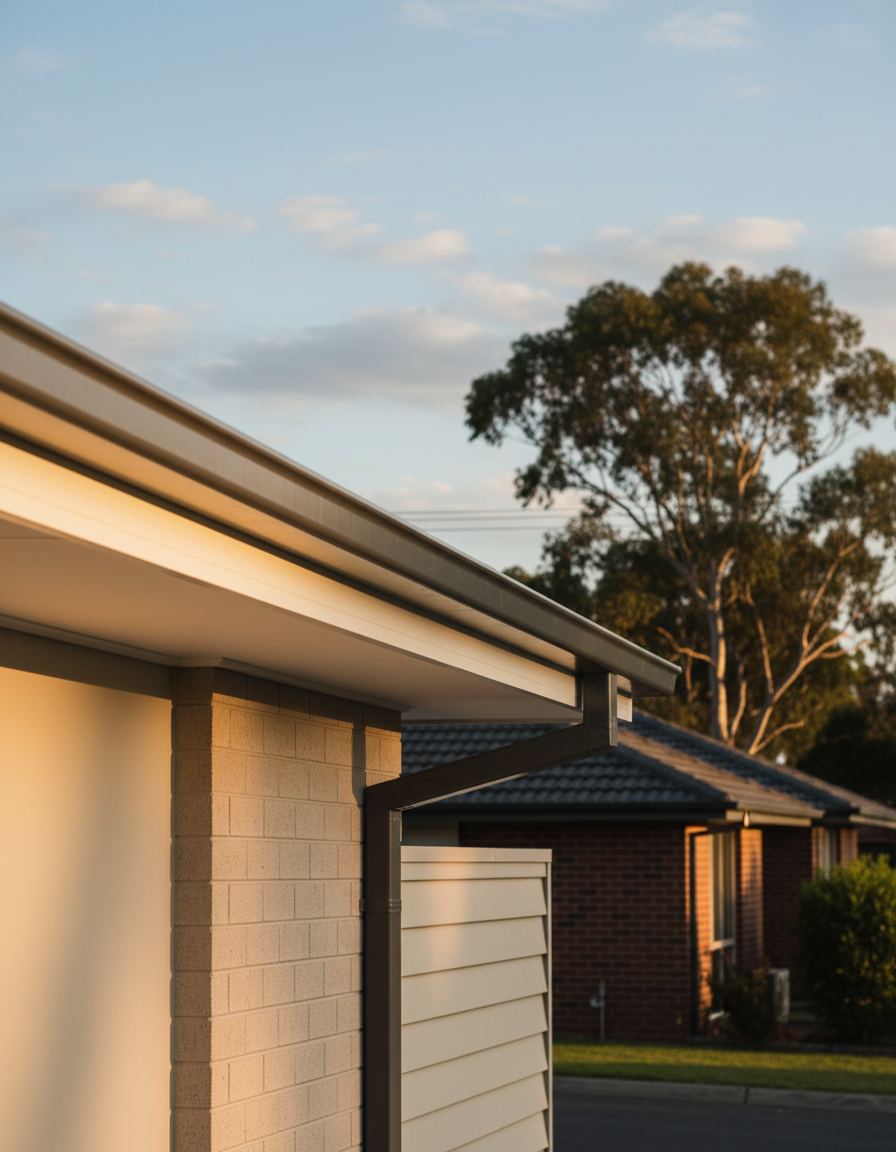
Eaves take a beating over time. Across Newcastle’s older housing stock, the most common issues we see are rotting timber soffits and fascia boards, cracked or sagging soffit sheeting, damaged guttering connections where water has been sitting and working its way into the structure, and storm or pest damage that’s left sections of the eaves open to the elements.
✅ Rotting or soft timber fascia and soffit boards ✅ Cracked, sagging, or delaminating soffit sheeting ✅ Storm damage leaving eaves sections exposed ✅ Pest entry points where eaves have deteriorated ✅ Deteriorated guttering connections causing water ingress ✅ Undersized or poorly installed eaves on older homes
The tricky part with eaves repairs is that what you can see on the surface usually isn’t the full story. A sagging soffit panel often points to timber framing behind it that’s already soft. A fascia board that looks like it needs a repaint is sometimes hiding rot that runs deeper than expected. Before we quote anything, we assess the full extent of the damage — not just the visible bit. That way, there are no surprises mid-job, and repairs are scoped to actually fix the problem rather than just patch over it.
Matching Materials to Your Existing Roofline
One of the most common complaints homeowners have about previous eaves repairs is that the work is visible — new sections that don’t quite match the profile, paint that sits slightly differently, or sheeting that’s a slightly different texture than what’s already there. It looks patched, because it was.
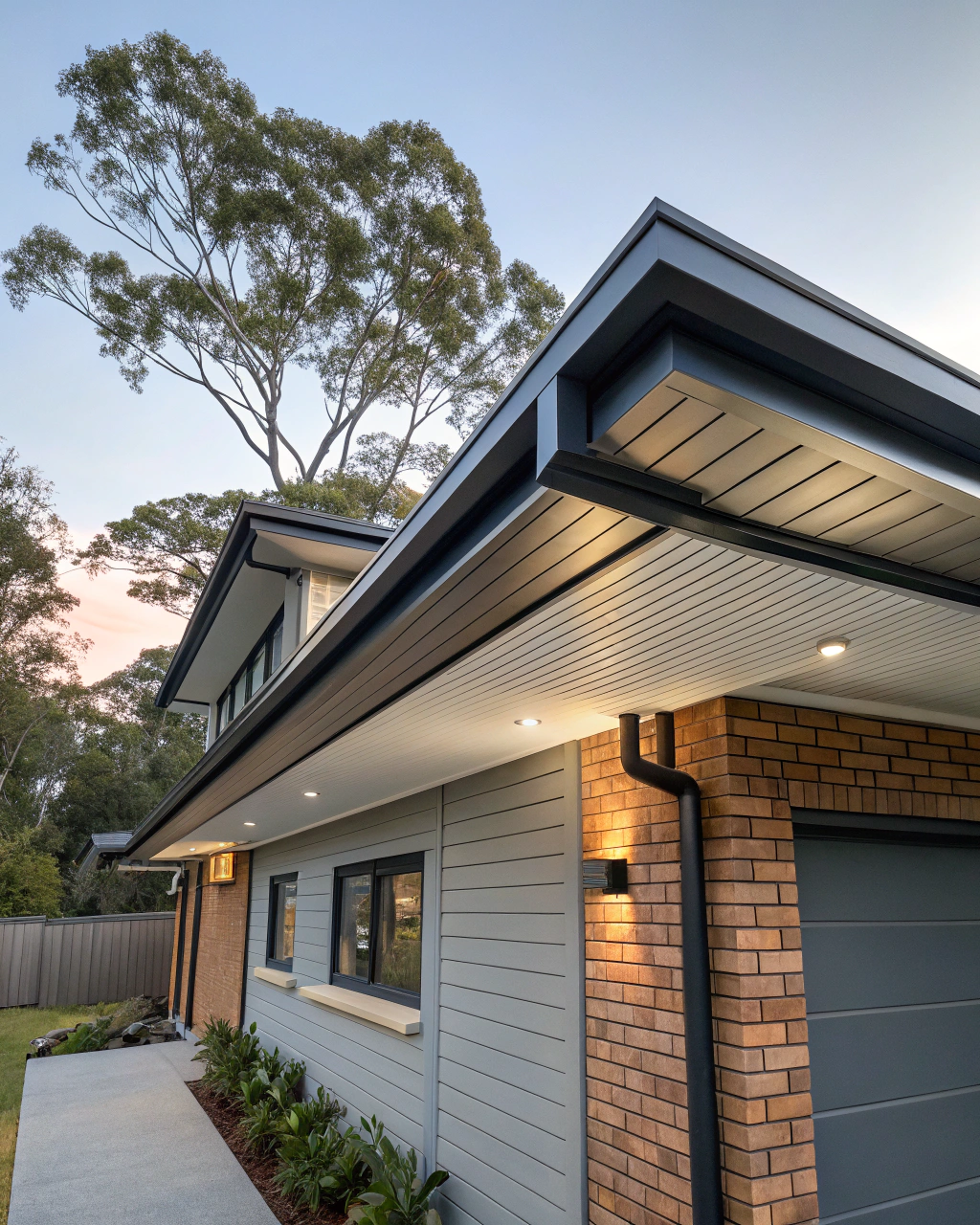
We take material matching seriously. Before we quote, we identify what’s currently on your roofline — whether that’s timber fascia, fibre cement soffit sheeting, aluminium trim, or a combination — and we source materials that align as closely as possible to the existing profile and finish. On older Newcastle homes, that sometimes takes a bit more effort. Certain timber profiles and soffit materials aren’t as readily available as they once were, but finding the right match is part of the job.
The goal is always the same — when the work is done, the repaired section should read as part of the original roofline. Not a repair. Just a roofline that looks the way it should.
Timber vs Fibre Cement Eaves — Which Is Right for Your Home
| Timber Eaves | Fibre Cement Eaves |
|---|---|
| Timber is the traditional choice across Newcastle’s older housing stock and suits homes where matching the existing roofline profile is the priority. It takes paint well, can be shaped to match heritage or period profiles, and feels at home on fibro cottages, Californian bungalows, and double-brick homes from the 60s through to the 80s. The trade-off is maintenance — timber needs to be kept painted and sealed, particularly in coastal suburbs where salt air and humidity accelerate deterioration if the surface breaks down. | Fibre cement is the more practical choice for most new eaves construction and repair work today. It doesn’t rot, it handles Newcastle’s coastal humidity better than timber over the long term, and it requires significantly less ongoing maintenance. Modern fibre cement products come in profiles that suit a wide range of homes and take paint cleanly. For homeowners who want a durable, low-maintenance result — particularly on extensions, carport connections, or full eaves replacements — fibre cement is usually the material we’d recommend first. |
Coastal Homes and Eaves Durability — What Newcastle Homeowners Should Know
If your home is within a few kilometres of the coastline — Merewether, Bar Beach, Newcastle East, Redhead, Swansea — the materials on your roofline are working harder than most homeowners realise. Salt air is corrosive. It gets into paint films, accelerates timber deterioration, and attacks any metal components that aren’t properly treated or coated. Eaves that might last twenty years in a western suburb can show significant wear within five to eight years on a coastal block if the wrong materials or finishes were used.
This isn’t a reason to avoid timber entirely on coastal homes — but it does mean the specification and finish matter more. Timber eaves in coastal locations need quality primer coats, proper paint systems, and regular maintenance cycles to perform. Fibre cement with a quality exterior paint system is a more forgiving option in high-exposure positions.
When we quote eaves work on coastal Newcastle properties, material selection is part of the conversation from the start. The goal is a result that handles the environment it’s actually in — not just one that looks good on completion day.


Frequently Asked Questions — Eaves Construction & Repair Newcastle
If the timber framing behind the soffit is soft or the fascia boards are rotting at multiple points, replacement is usually more cost-effective than patching. We assess the full extent before recommending either direction.
In most cases, eaves work carried out as part of a repair or like-for-like replacement doesn’t require approval. New eaves on extensions may fall under existing development consent. We’ll flag anything that needs checking before work starts.
Well-maintained timber eaves can last thirty-plus years. Fibre cement holds up longer with less maintenance. Coastal properties see faster deterioration — typically five to ten years shorter lifespan if materials aren’t specified correctly for the environment.
Yes. We identify existing profiles, sheeting types, and finishes before quoting and source materials that align as closely as possible. On older homes this takes more effort, but matching the existing roofline is always the goal.
Moisture is the primary culprit — either from failed paintwork, damaged guttering connections, or poor original installation that allows water to sit against timber surfaces. Pest activity and storm damage accelerate deterioration once the surface protection breaks down.
Sometimes, yes. If the guttering is in reasonable condition and falls are correct, we work around it. Where guttering is damaged or poorly integrated with the fascia, replacing it as part of the eaves repair is usually the smarter call.
Get a Free Eaves Inspection and Quote in Newcastle
If you’ve noticed damage, sagging, or deterioration on your eaves — or you’re planning a renovation or extension that involves new eaves construction — the best next step is a free on-site inspection. We’ll assess the full scope of the work, give you a clear picture of what’s involved, and quote the job honestly before anything starts.
We’re local to Newcastle and the Hunter Region, we’re familiar with the housing stock across these suburbs, and we’re not going to patch over a problem that needs a proper fix.
Call us today or fill in the contact form to book your free inspection. We’ll get someone out to you promptly.