
How Long Do Polycarbonate Roof Panels Last?
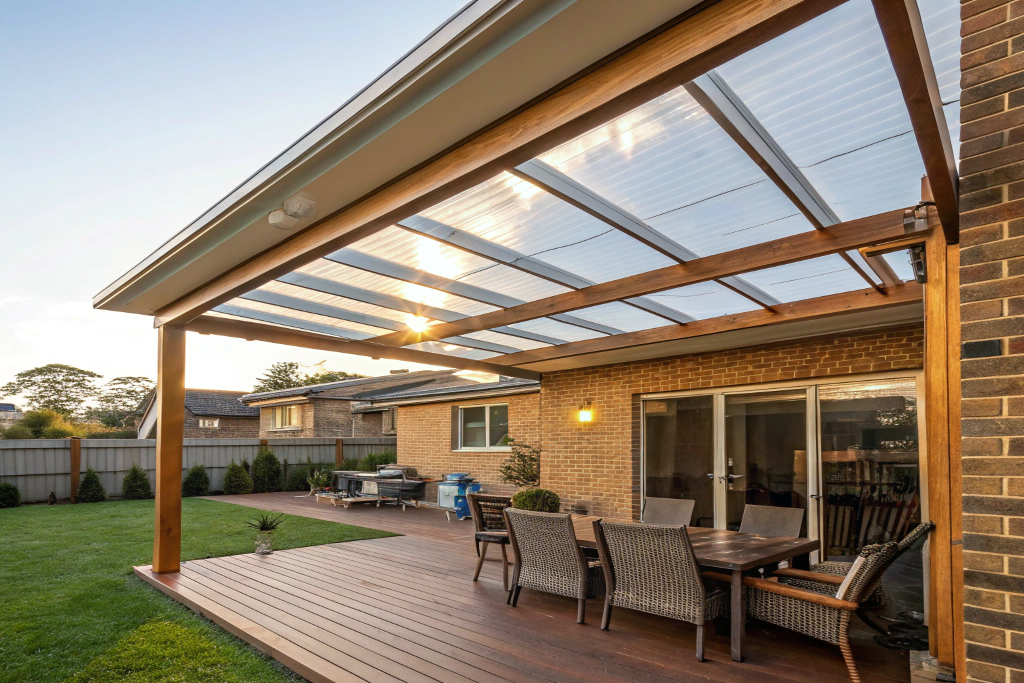
Quality polycarbonate roof panels installed correctly in Newcastle typically perform well for 15–20+ years — provided the panels have a genuine UV-stabilised coating and the installation allows for thermal movement.
- UV coating quality is the biggest factor — uncoated or cheaply coated panels yellow and go brittle within 3–5 years under Newcastle’s high UV exposure
- Panels fixed without room to expand and contract will crack at the fixing points over time, regardless of panel quality
- Twin-wall and multiwall sheet construction outlasts single-skin profiles in both impact resistance and daily heat cycling
- Correct fall and sealed sheet ends stop moisture getting into the hollow channels, which breaks panels down from the inside
- Regular cleaning with mild soap and water removes surface build-up that speeds up UV coating breakdown

What Polycarbonate Roof Panels Deliver That Opaque Roofing Cannot
When you put a solid roof over an outdoor area — Colorbond, insulated panels, timber — you get weather protection, but you lose the sky. The space underneath gets darker, feels smaller, and stops feeling like an outdoor area altogether.
Polycarbonate is the only roofing material that solves both problems at once. It keeps rain and UV out while still letting natural light filter through from above. The covered area stays bright, open, and connected to the outdoors — not enclosed beneath a ceiling.
For patios and pergolas where natural light matters, that’s a difference worth building around. No other roofing option delivers it.
Panel Types and Specifications Explained
Thermal and Acoustic Performance — What to Expect
Polycarbonate is not an insulated roofing product, and it’s worth being clear about that before you commit.
Under a clear polycarbonate roof on a north or west-facing patio, heat build-up on a hot Newcastle afternoon is real. Choosing a bronze tint and a thicker multiwall profile will reduce it, but it won’t eliminate it the way a fully insulated panel would. If your patio faces north or west and you spend a lot of time out there through summer, that’s a conversation worth having before you choose your roofing material.
Rain noise is the other trade-off. Polycarbonate carries rain sound more than insulated or metal roofing does. On a heavy Newcastle downpour, you’ll hear it. For some people that’s not an issue — for others it is. Multiwall profiles dampen it slightly compared to corrugated single-skin sheet, but it’s still a factor.
Being upfront about both of these things is part of how we work at Newcastle Pergolas. If polycarbonate isn’t the right fit for your space, we’d rather tell you that early than have you unhappy with the result.
Installation Standards That Determine Long-Term Performance
A quality polycarbonate panel installed incorrectly will still fail early. The installation matters just as much as the panel itself.
Correct Fall and Drainage: Polycarbonate roofing needs a minimum fall to drain properly. Flat installations trap water against sheet ends and fixings, creating leak points and accelerating deterioration over time.
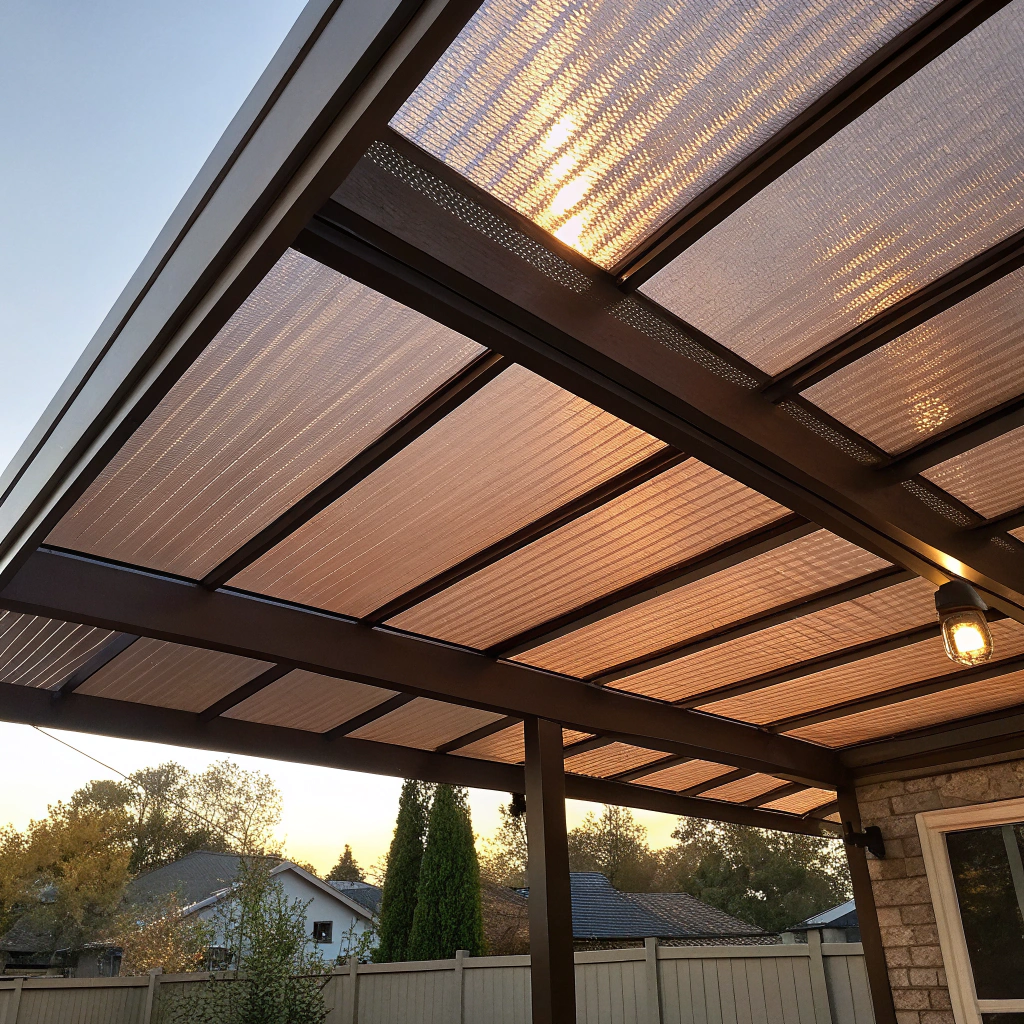
Sheet End Sealing and Capping: The open channels in twin-wall and multiwall sheets need to be sealed at both ends. Top ends are sealed to stop water entry, bottom ends are vented to let condensation escape. Skipping this step is a common shortcut that shortens panel life significantly.
Fixing Systems and Thermal Movement Allowance: Polycarbonate expands and contracts more than metal roofing does. Fixings that don’t allow for this movement cause panels to crack at the fixing points over time. Oversized fixing holes and the correct fasteners with rubber washers let the panel move without stress.


Applications Where Polycarbonate Is the Strongest Roofing Choice
Polycarbonate isn’t the right fit for every outdoor structure — but for the right applications, nothing else comes close.
These are the six situations where polycarbonate roof panels consistently deliver the best result:
- Covered walkways — natural light along the full length without weather exposure
- Pergolas over garden areas — lets sunlight reach plants below while keeping rain off the entertaining space
- South-facing patios — lower heat build-up makes clear or opal panels a comfortable choice year-round
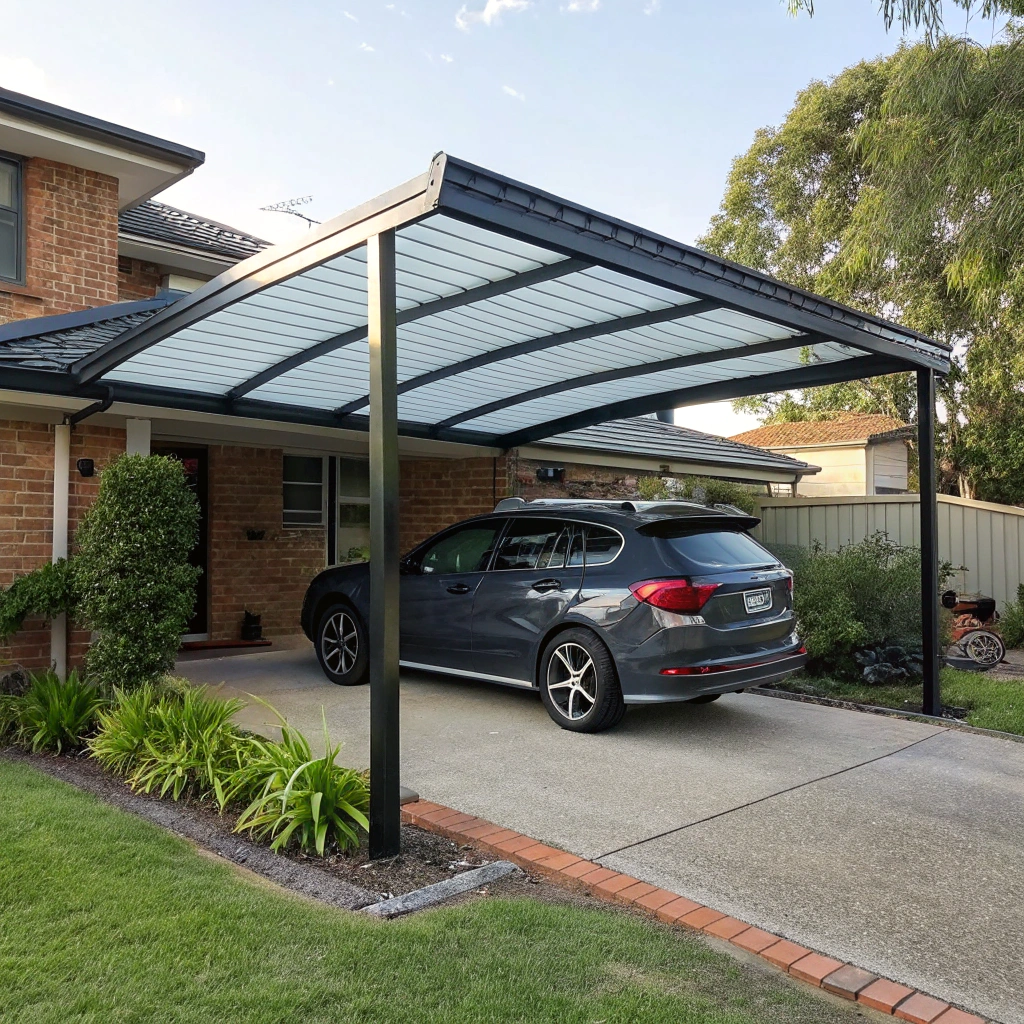
- Carport roofing — polycarbonate carport roofing keeps the space bright without the closed-in feel of a solid roof
- Pool surrounds — light transmission keeps the area open and inviting while providing weather cover
- Light-limited spaces — where a solid roof would make the area too dark to use comfortably
For covered patios where insulated roofing might be a better fit, we’re happy to walk you through the difference.
Panel Selection for Newcastle's Climate and Orientation
Choosing the right panel comes down to your patio’s orientation and Newcastle’s specific conditions — not just personal preference.
North and West-Facing Patios: These positions cop the most direct sun and heat through summer afternoons. Bronze tint reduces heat and glare better than clear or opal, and a thicker multiwall profile adds thermal resistance. For north and west-facing areas, combining both gives the most comfortable result.
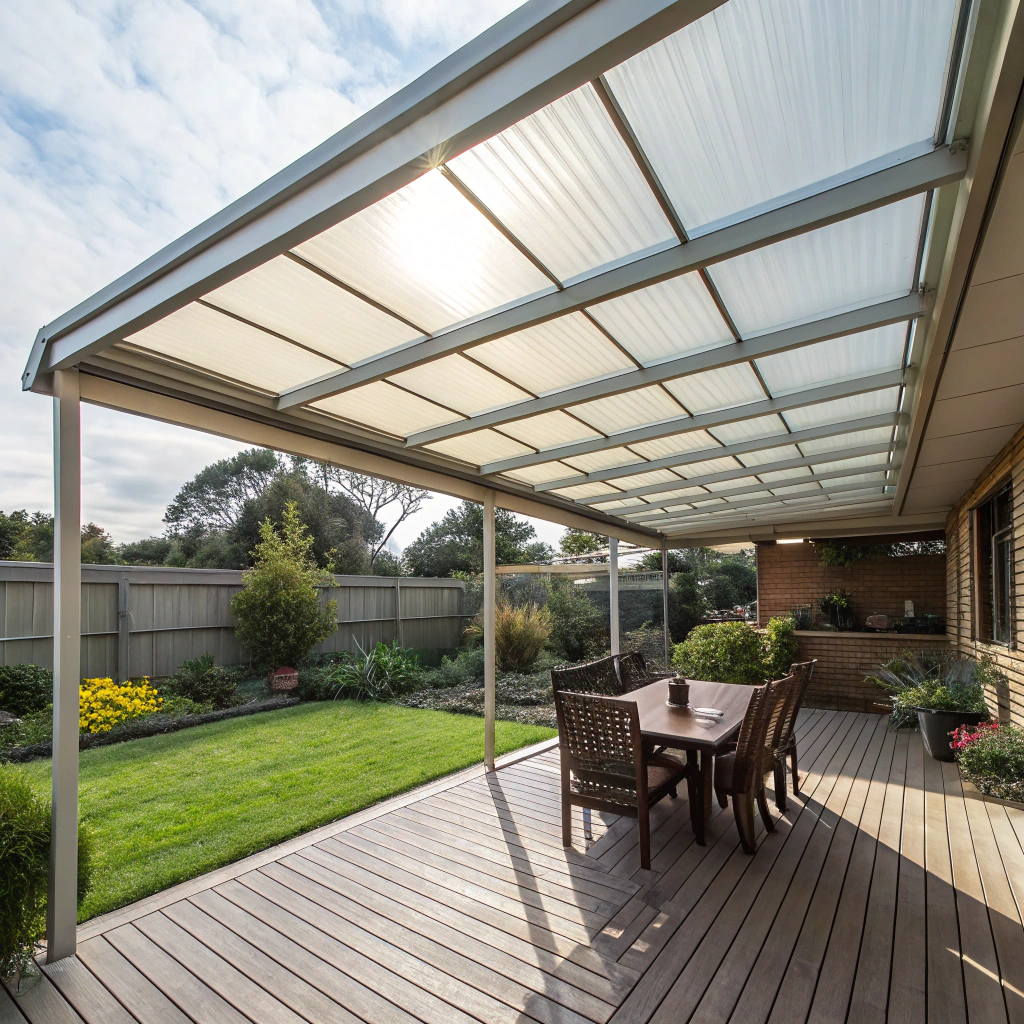
South-Facing and Light-Limited Spaces: South-facing patios get less direct sun, making clear or opal panels a practical and comfortable choice. Clear maximises light where heat isn’t a concern — opal softens glare while keeping the space bright.
Coastal Considerations — UV Exposure and Salt Air: Newcastle’s coastal suburbs add two factors worth accounting for. UV intensity near the coast is high, making co-extruded UV protection essential. Salt air also accelerates surface wear on lower quality panels — material quality matters more the closer you are to the water.
Council Approval for Polycarbonate Roofing Structures in Newcastle
Adding a polycarbonate roof to a patio, pergola, or carport structure in Newcastle may require development approval through Newcastle City Council — the same approval requirements that apply to any covered outdoor structure.
Whether approval is needed depends on the size of the structure, its position on the property, and your specific zoning conditions. Some projects fall within exempt development provisions and don’t require a formal application. Others do.
At Newcastle Pergolas, we’re across the approval process and can advise you on what applies to your project from the start. Where approval is required, we can manage that process for you so it doesn’t become a roadblock between you and getting the work done.
Frequently Asked Questions
Yes, in most cases. As long as the existing frame is structurally sound and has adequate fall, we can install polycarbonate roofing over it without rebuilding the whole structure.
Quality panels with proper UV-stabilised coating, installed correctly, typically last 15–20 years or more in Newcastle’s conditions. The coating quality and installation standard are the two biggest factors.
They can, particularly on north and west-facing patios in summer. Choosing a bronze tint and a thicker multiwall profile helps significantly, but polycarbonate won’t perform the same as a fully insulated roof in terms of heat reduction.
More noisy than insulated or Colorbond roofing, yes. Multiwall profiles dampen rain noise better than corrugated single-skin sheet, but it’s still something to factor in before you decide.
Twin-wall sheet has hollow channels running through it, giving better insulation and impact resistance. Corrugated polycarbonate is a single-skin profile that matches standard corrugated roofing lines — lighter and easier to fit, but less thermally efficient.
It depends on the size and position of the structure. Some projects fall within exempt development provisions and don’t need a formal application. We’ll advise you on what applies to your project from the start.
It depends on which way your patio faces. North and west-facing areas benefit most from bronze tint to manage afternoon heat and glare. South-facing and shaded areas are well suited to clear or opal panels.
Yes, and we install it across Newcastle’s coastal suburbs regularly. We specify panels with co-extruded UV protection and use appropriate fixings for salt air environments to make sure the installation holds up long term.
Get a Free Quote from Newcastle Pergolas
If polycarbonate roofing feels like the right direction for your outdoor area, the next step is straightforward. We’ll come out, look at your space, talk through panel options based on your orientation and position, and give you a clear quote with no obligation.
At Newcastle Pergolas, we supply and install polycarbonate roof panels across Newcastle and the Hunter Region. We’ll give you honest advice on whether polycarbonate is the right fit — and if something else suits your space better, we’ll tell you that too.
Call us or fill in the form below to book your free measure and quote.