
Why Newcastle’s Climate Makes a Retractable Roof the Smarter Choice
Newcastle and the Hunter Region get genuine seasonal variation — and that’s exactly the problem a fixed roof can’t solve. Summer here means bright, hot days where shade and airflow are everything. Winter means cool mornings where you actually want sun flooding into your outdoor space to make it usable. A fixed roof picks one side of that equation and ignores the other. A retractable system adapts to whatever the day is doing.
Summer afternoons in Newcastle come with another challenge that anyone who’s lived here long enough knows well — coastal storms that build fast and arrive with limited warning. A motorised louvre system that closes in seconds is a genuinely practical feature here, not a luxury add-on. You’re not rushing outside to cover furniture or drag things inside. You hit a button, and the roof is closed.
The result is an outdoor space with year-round usability that a shade sail, a Colorbond patio, or a polycarbonate roof simply can’t deliver. For Newcastle conditions specifically, a retractable roof pergola isn’t the premium option — it’s the practical one.

How Retractable Roof Pergolas Work
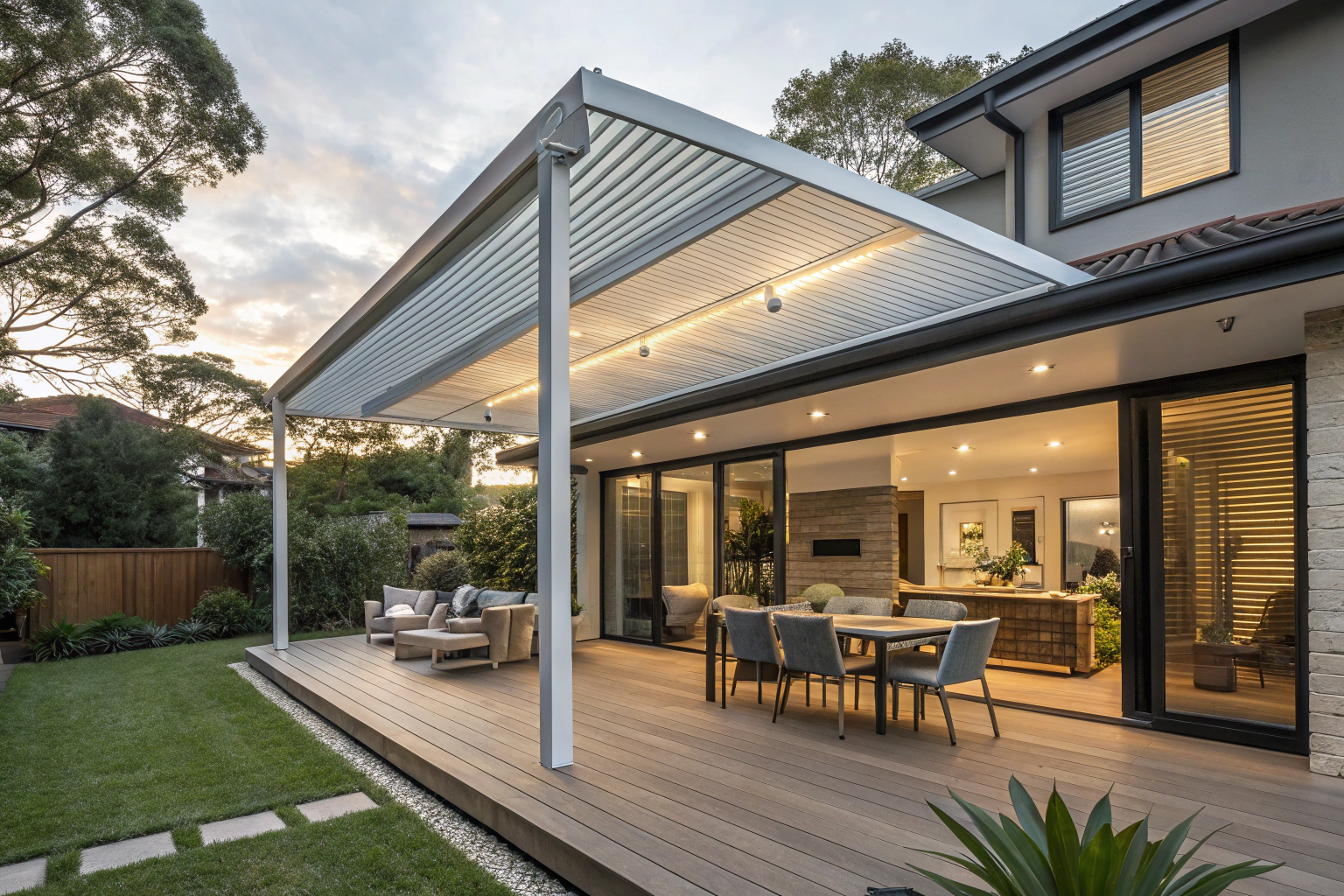
Louvred Roof Systems
Louvred roof systems use adjustable aluminium blades that rotate to control light, airflow, and weather protection. When the blades are open, you’ve got full sky access and airflow moving through freely. Rotate them to horizontal, and you’ve got complete rain coverage. Anywhere in between, you’re adjusting the amount of light and air coming through to suit the conditions. It’s that control — blade by blade, degree by degree — that makes louvre systems the most popular and versatile retractable roof option available.
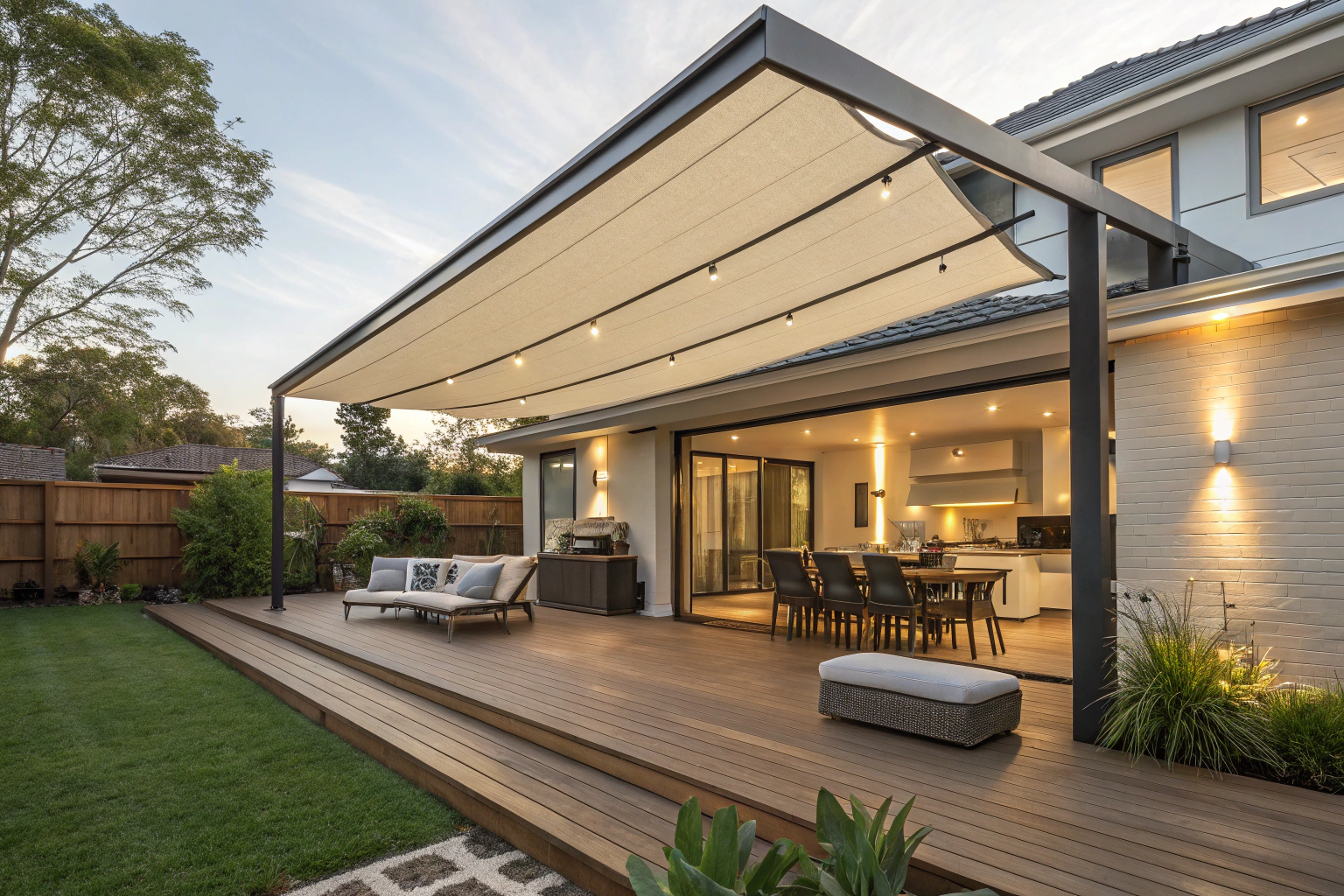
Fabric Retractable Systems
Fabric retractable systems are worth considering for homeowners after a softer, more relaxed aesthetic. The fabric retracts along a track system and extends out to cover the space when needed. They work well for light shade and UV protection on clear days, and the visual result is less structured than an aluminium louvre system. The trade-off is weather performance — fabric systems aren’t designed to handle heavy rain the way a quality louvre system is. For Newcastle’s climate, that’s a limitation worth factoring in before you commit.
Motorised Operation, Remote Control & Smart Home Integration
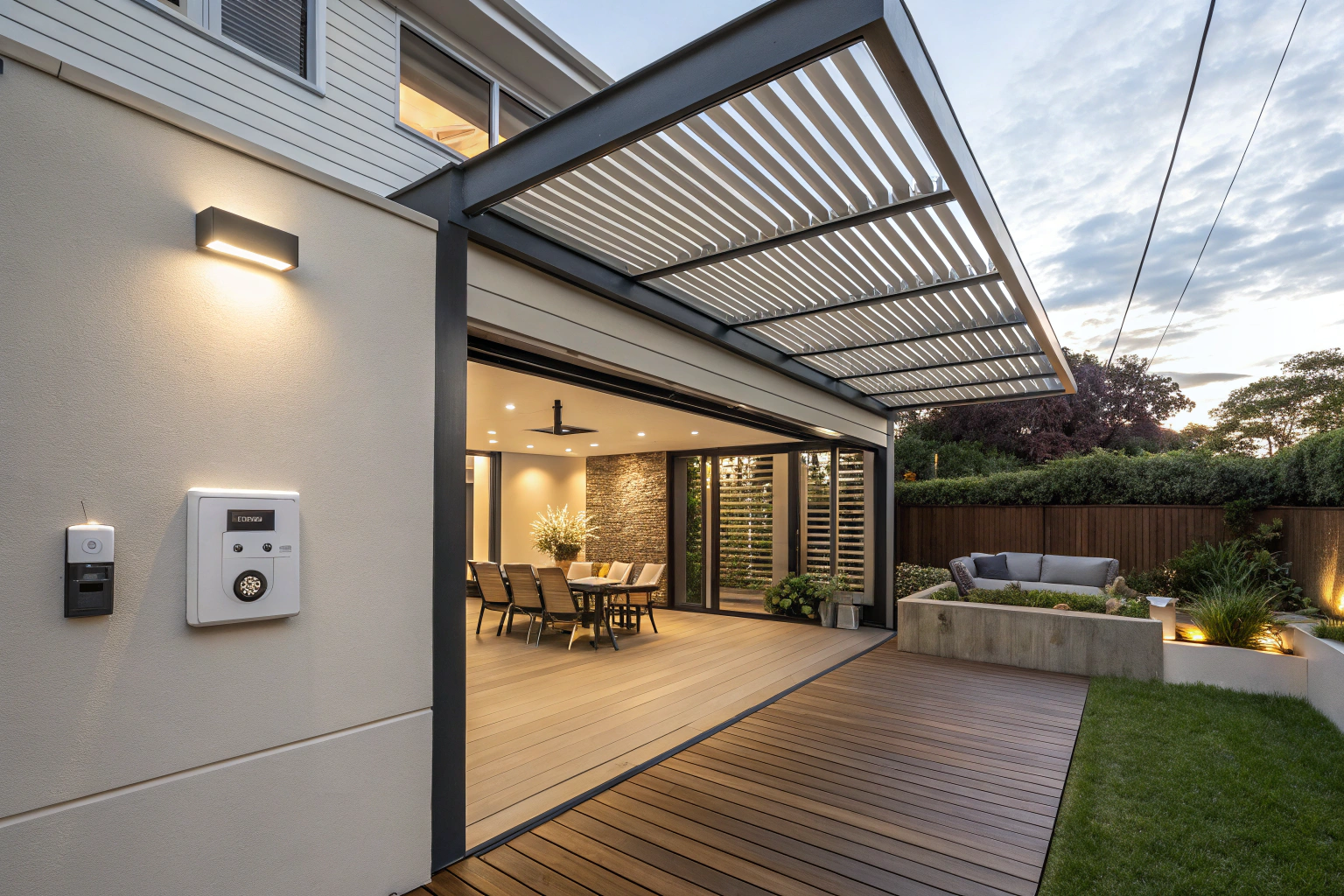
Most quality louvre systems are available with motorised blade operation as standard, and it’s worth understanding what that actually means in day-to-day use. Rather than manually cranking a handle to adjust the blades, a motorised system moves everything at the touch of a button — a wall-mounted switch, a handheld remote, or a smartphone app, depending on the system specified.
Higher-end louvre products integrate with smart home platforms, which means the roof can be programmed to respond to weather sensors automatically. If rain is detected, the blades close without you having to do anything. Some systems allow scheduling — open the roof at a set time in the morning, close it in the afternoon when the sun hits a certain angle.
For Newcastle homeowners who entertain regularly or want a genuinely low-effort outdoor space, motorised operation isn’t just a convenience feature. When a storm rolls in fast off the coast, being able to close the roof in seconds from wherever you’re standing is exactly the kind of practical advantage that justifies the investment.
Attached vs Freestanding Retractable Roof Pergolas
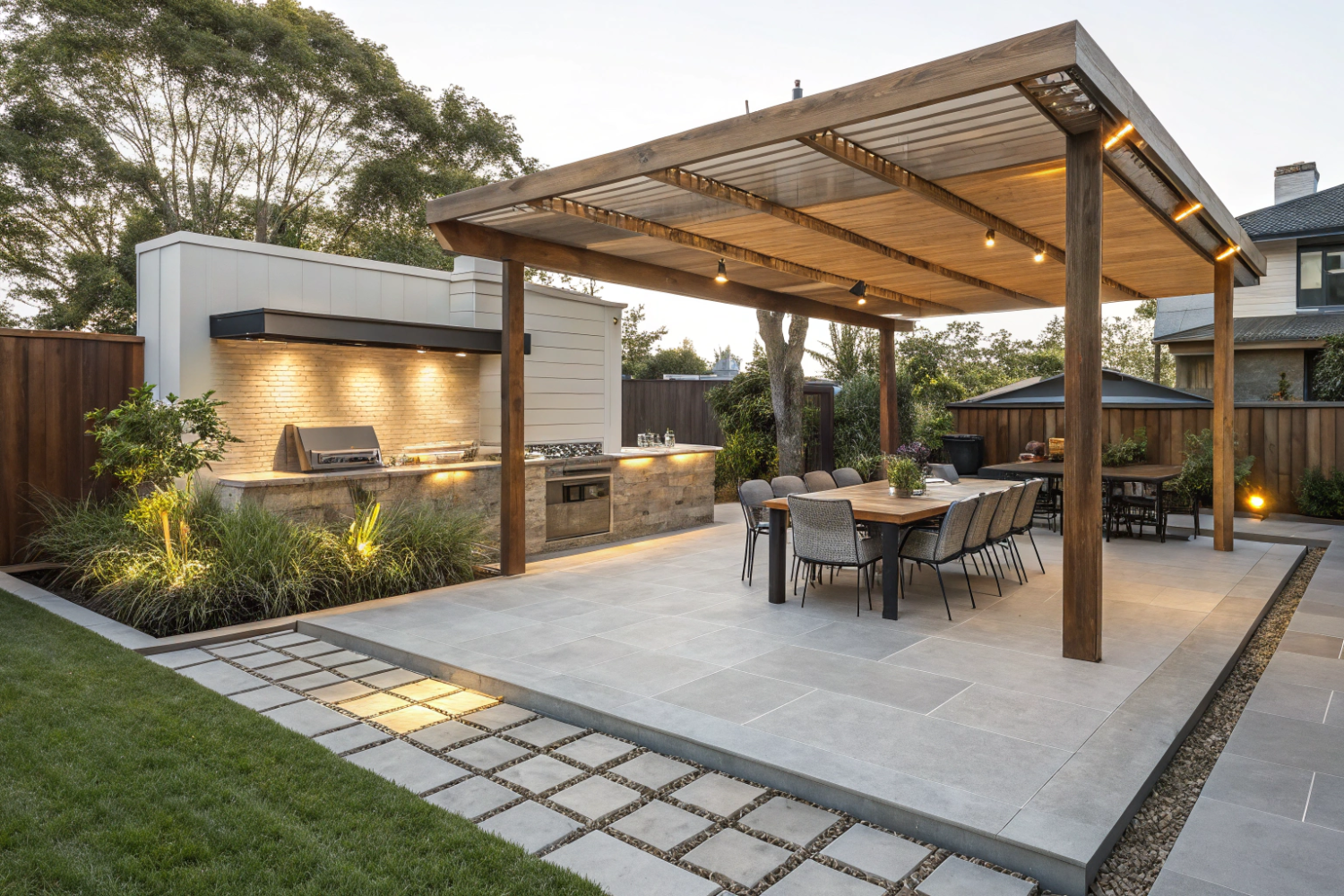
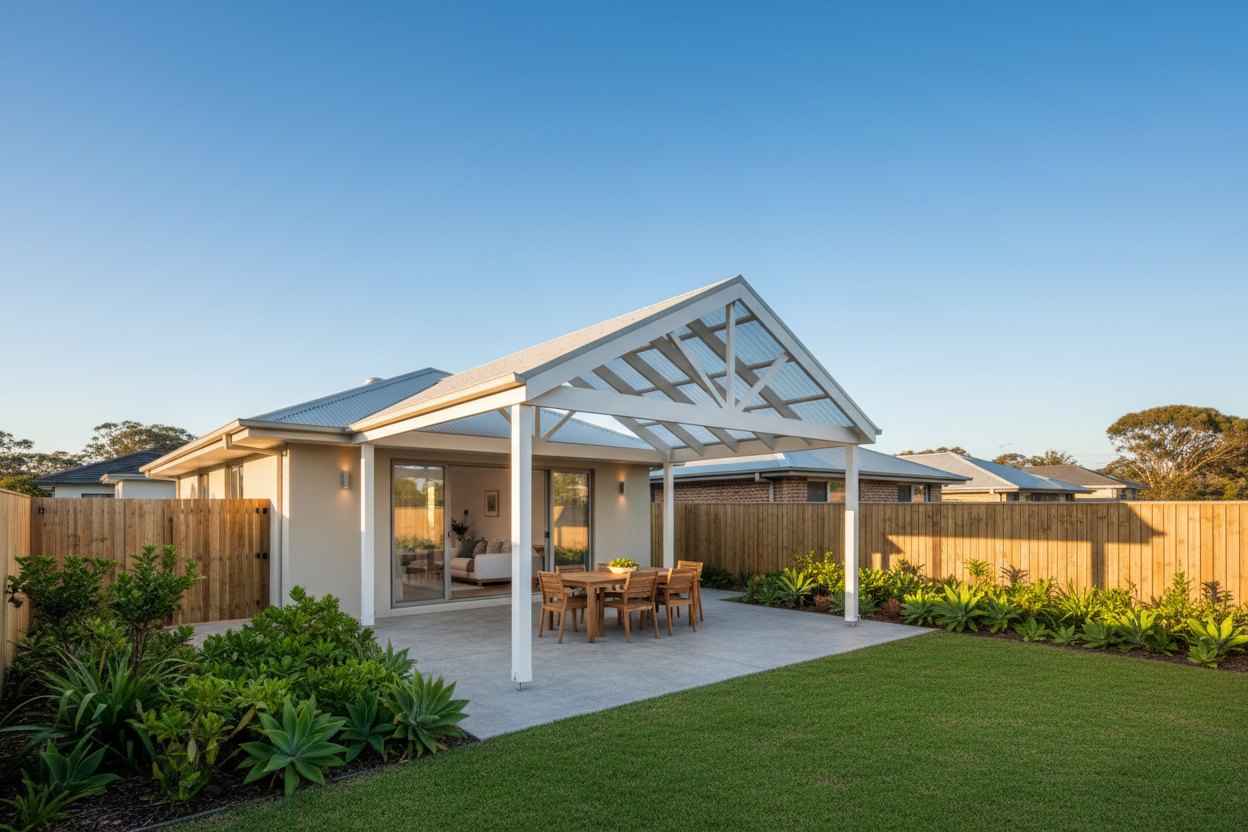
| Attached Retractable Roof Pergola | Freestanding Retractable Roof Pergola |
|---|---|
| An attached retractable roof pergola connects directly to the home’s existing structure, typically fixed to the fascia or wall. This creates a seamless flow between indoor and outdoor living areas and is the most popular configuration for Newcastle homes, where the entertaining area sits directly off the living room or kitchen. Drainage at the connection point needs to be managed carefully to protect the home’s existing roofline — this is one of the installation details that separates a properly built system from a problem waiting to happen. | A freestanding retractable roof pergola sits independently of the home, supported entirely by its own posts and frame. This gives more flexibility in placement — over a pool area, further down the yard, or in a position that captures the best aspect on the block. Drainage is simpler to manage since there’s no connection to the home’s roofline. Freestanding systems work particularly well for pool pergolas and larger outdoor entertainment areas where the structure needs to cover a space that isn’t adjacent to the house. |
Frame Materials, Colours & Finish Options
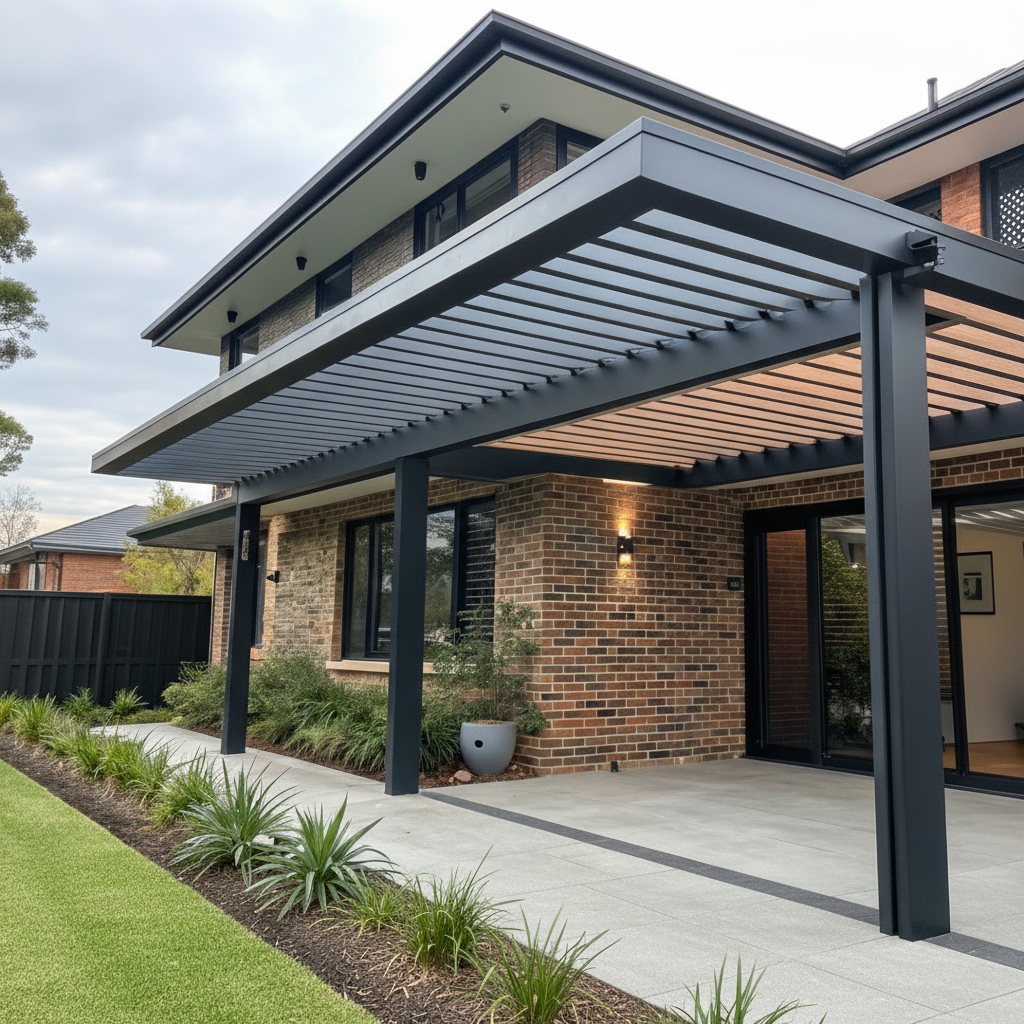
The majority of quality retractable roof systems use aluminium frames, and there are good reasons for that. Aluminium doesn’t rust, doesn’t warp with temperature changes, and holds its dimensions over decades — which matters for a system where blade alignment and smooth operation depend on the frame staying true. For Newcastle homeowners close to the coast, aluminium’s corrosion resistance isn’t a minor detail. Salt air eats through inferior materials faster than most people expect, and a frame that degrades affects the whole system’s performance.
Colour and finish options vary by manufacturer, but most quality louvre systems offer a broad powder-coat palette that can be matched closely to an existing home’s colour scheme — whether that’s a classic Surfmist to suit a coastal weatherboard, a deep Monument to complement a modern brick home, or something custom-specified for a heritage property in Hamilton or Merewether.
Getting the colour selection right at the specification stage means the finished structure looks like it was always meant to be there — not bolted on as an afterthought.
Sizing & Span: What’s Achievable on a Newcastle Block
Retractable roof systems aren’t one-size-fits-all, and giving homeowners a realistic sense of what’s achievable on their specific block is part of what the site assessment is for. Most quality louvre systems can cover spans from around 3 metres up to 6–7 metres in a single bay without intermediate posts, which covers the majority of residential entertaining areas across Newcastle’s housing stock. Larger areas are achievable by running multiple bays side by side, which allows the system to scale across wider spaces without compromising structural integrity or blade operation.
Newcastle’s housing stock throws up a range of configurations — narrow side yards in Hamilton terrace homes, wide open back areas in Kotara or Charlestown, split-level blocks in Merewether and Bar Beach where the ground drops away from the living area. Each of those situations affects how the system is designed and how the frame is engineered.
Span limitations, post placement, and structural requirements are all things we work through during the initial site assessment — before any commitments are made and before any money changes hands.
Built-In Drainage — No Sheeting, No Mess
One of the details that separates a quality louvre system from a cheaper alternative is how it handles rainwater. On a basic pergola cover, rain hits the roof surface and sheets off the edges — which means water cascading onto your outdoor furniture, flooding the perimeter of the space, and running toward the house in an attached configuration. It’s a problem that becomes obvious the first time it rains after installation.
Quality louvre systems handle this completely differently. The aluminium blades are engineered with a subtle channel profile that collects rainwater as it falls and directs it toward the frame. From there, the water travels down through the posts themselves and exits at the base — either into the ground or connected to the home’s stormwater system. The result is a roof that handles rain without sheeting, without pooling, and without sending water where you don’t want it.
For attached retractable roof pergolas in Newcastle, proper drainage routing at the connection point is one of the installation details we pay close attention to — because it’s exactly the kind of thing that causes problems down the track if it’s not done right from the start.


Frequently Asked Questions About Retractable Roof Pergolas in Newcastle
Most residential pergola structures in Newcastle fall under complying development, meaning approval is straightforward. Specific requirements depend on your block size, setbacks, and whether the structure is attached or freestanding. We work through this with you during the site assessment.
Most residential retractable roof pergola installations are completed within two to four days depending on the size and configuration. We confirm the timeline clearly before work begins so you can plan around it.
Yes. When the blades are fully closed, a quality aluminium louvre system is completely waterproof. The blade profile channels rainwater into the frame and down through the posts, keeping the space dry underneath.
Absolutely. Attached configurations are the most common setup we install across Newcastle. The connection point is engineered carefully to protect your existing roofline and manage drainage correctly from day one.
A louvre system uses aluminium blades that rotate and handle heavy rain reliably. Fabric systems offer a softer aesthetic and work well for light shade but aren’t suited to Newcastle’s heavier coastal downpours the way aluminium louvres are.
Yes. Most quality louvre systems we install offer motorised operation via wall switch, handheld remote, or smartphone app. Higher-end systems can integrate with smart home platforms and respond to weather sensors automatically.
Get a Free Quote on a Retractable Roof Pergola in Newcastle
If you’re seriously considering a retractable roof pergola for your Newcastle home, the best next step is a free on-site consultation. There’s no substitute for having someone walk your block, look at the space, and give you an honest assessment of what’s achievable — including sizing, configuration, drainage, and any council approval requirements that apply.
We install retractable roof pergolas across Newcastle and the Hunter Region — Merewether, Hamilton, Kotara, Charlestown, Bar Beach, Warners Bay, Wallsend, Jesmond, and everywhere in between. Quality systems, installed properly, with post-installation support if anything needs adjusting.
No pressure, no vague answers. Just a clear picture of the right system for your home and what it’s going to cost.
Call us today or fill in the enquiry form to book your free on-site consultation.