
What a Covered Walkway Does for Your Property
A covered walkway is one of those structures that solves a problem so effectively you wonder why it wasn’t there from the start. At its most practical, it keeps people dry and protected from the elements while moving between two fixed points on a property — from a home to a detached garage, from a main building to a granny flat or studio, from a reception area to a separate amenities block on a commercial site. That kind of daily functionality is easy to underestimate until you have it. Once it’s built, it becomes part of how the property works.
But a covered walkway that’s been properly designed and built does more than provide shelter. It connects structures visually, defines how people move through a site, and gives the whole property a finished, considered quality that’s hard to achieve any other way. For residential properties, that means a home that feels complete and cohesive. For commercial sites, it means a professional, weather-proof environment for staff and clients. We design and build custom covered walkways across Newcastle and the Hunter Region for both.

Covered Walkways for Every Property Type in Newcastle
Covered walkways serve a wide range of properties across Newcastle and the Hunter Region — and the applications are more varied than most people initially think. Whether it’s a homeowner bridging the gap between a main dwelling and a granny flat, or a business connecting two buildings on a busy commercial site, the underlying need is the same: reliable, weather-protected movement between two points that people use every day. Residential builds tend to focus on aesthetics and integration with the existing home, while commercial specifications need to account for higher foot traffic loads, wider walkway widths, and more complex structural fixing into existing building fabric. We design and build across both contexts with equal capability.
✅ Homeowners connecting main dwellings to granny flats, studios, or secondary structures
✅ Residential properties bridging the gap to detached garages or workshops
✅ Childcare centres and preschools needing compliant covered connections to outdoor areas
✅ Schools and educational campuses requiring all-weather paths between buildings
✅ Medical and allied health practices connecting reception and treatment areas
✅ Office and professional sites where client-facing paths need to perform to a high standard
✅ Industrial and light commercial premises covering access between workshops and amenities blocks
✅ Retail and hospitality sites where covered pathways form part of the customer experience
✅ Aged care and community facilities requiring safe, weather-protected circulation between buildings
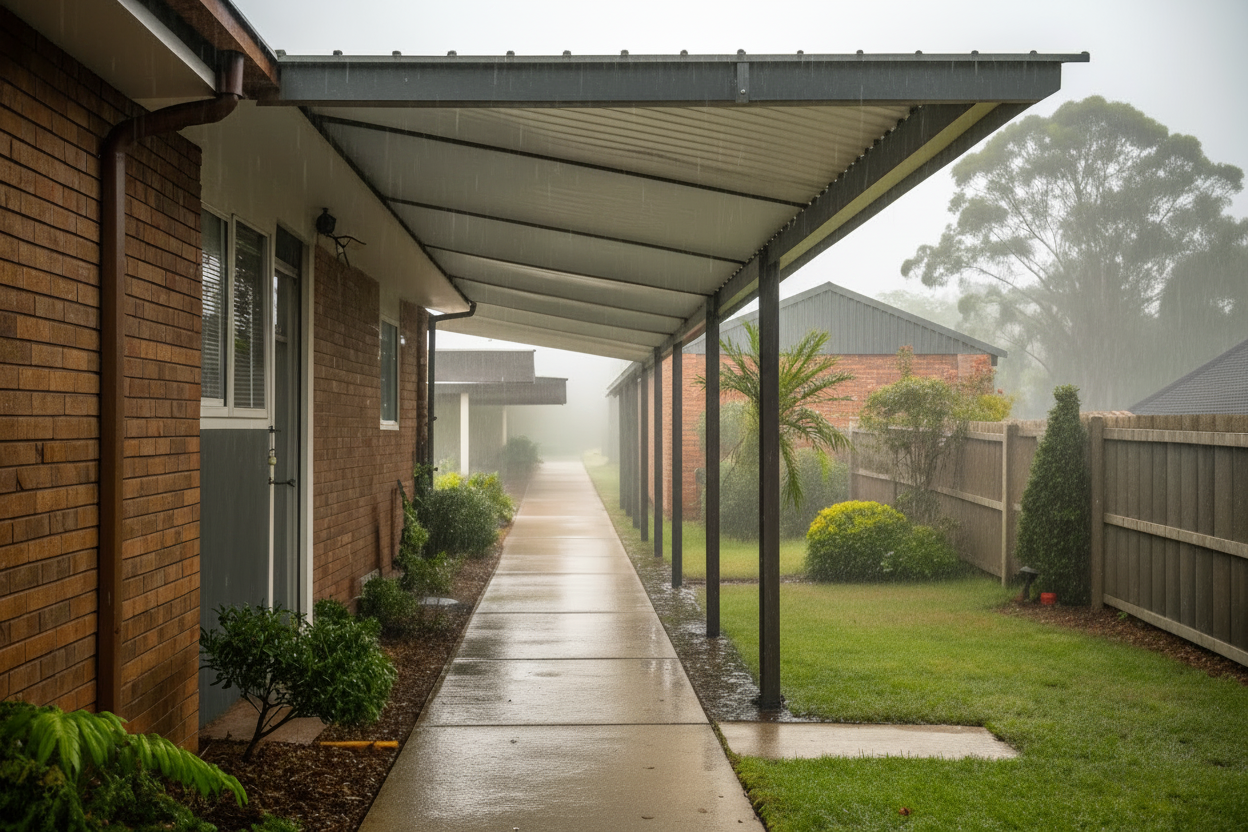
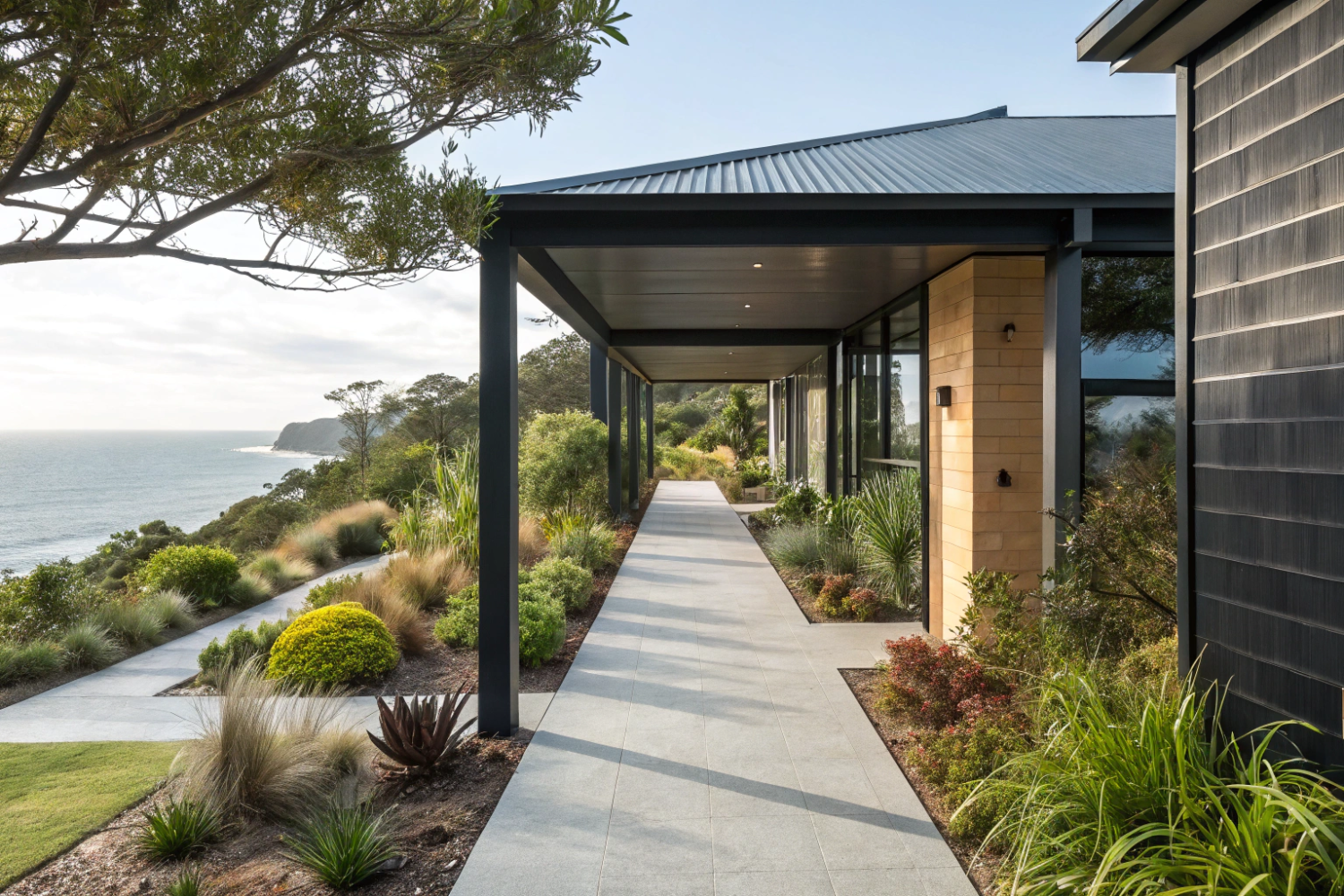
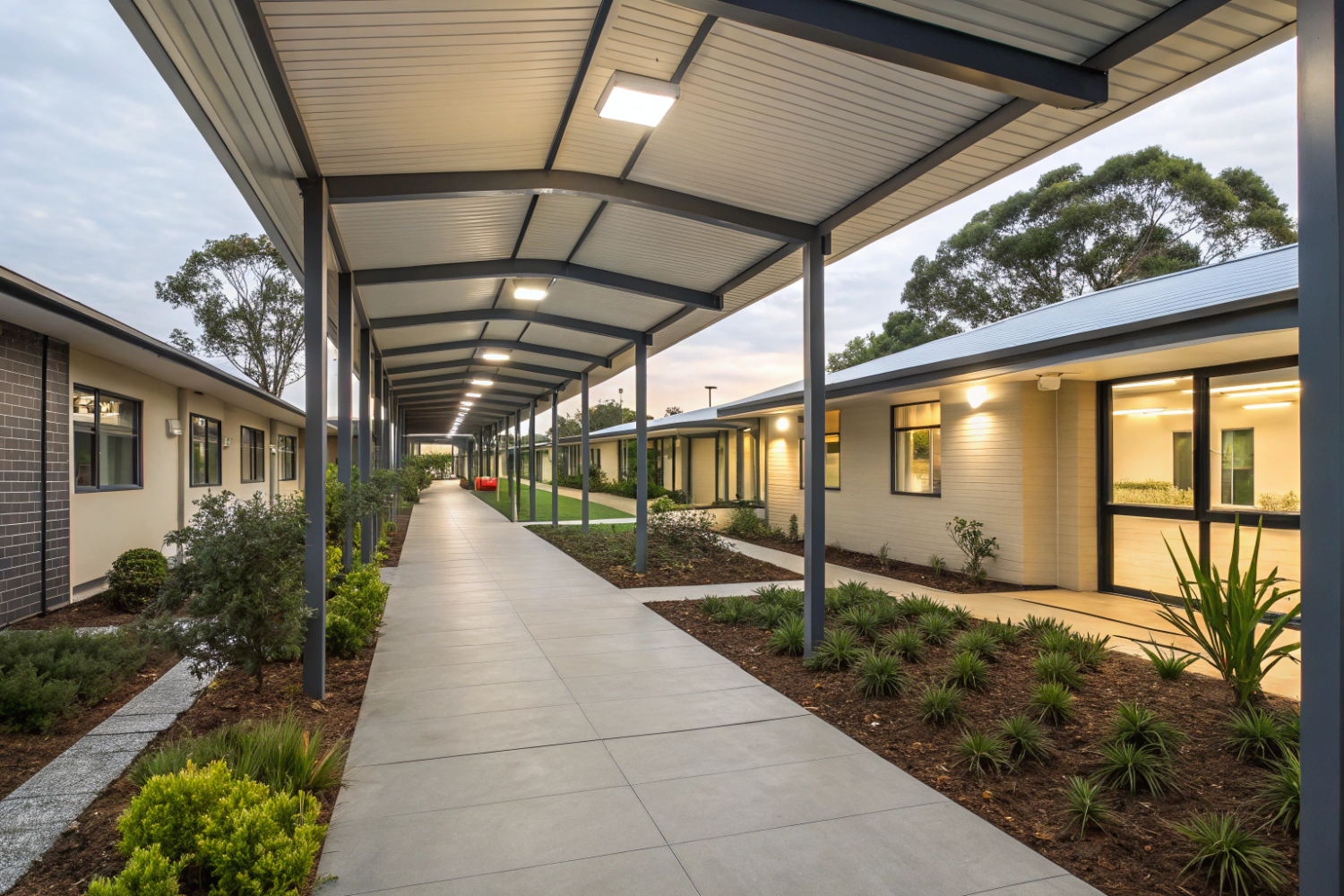

Designing a Covered Walkway Around Your Existing Structures
Every covered walkway spans between two fixed points — and those fixed points dictate almost everything about how the structure needs to be designed. The existing buildings at each end of the walkway determine the fixing approach, the height the walkway needs to clear, and how the roofline integrates with what’s already there. Getting this right from the start is what separates a walkway that looks like it belongs from one that looks bolted on as an afterthought.
Before any design work begins, we conduct a proper site assessment that accounts for:
- Fixing points on each existing structure and what they can carry
- Height differences between the two buildings being connected
- The distance being spanned and the structural approach that requires
- Ground conditions and gradient along the walkway route
- Drainage — where water will run and how it’s managed off the roof
From there, we design a structure that works with your existing buildings rather than against them. The materials, the roofline pitch, the post placement — all of it is resolved around your specific site before a single piece of material is ordered.
Built to Integrate With Your Property, Not Just Sit Next to It
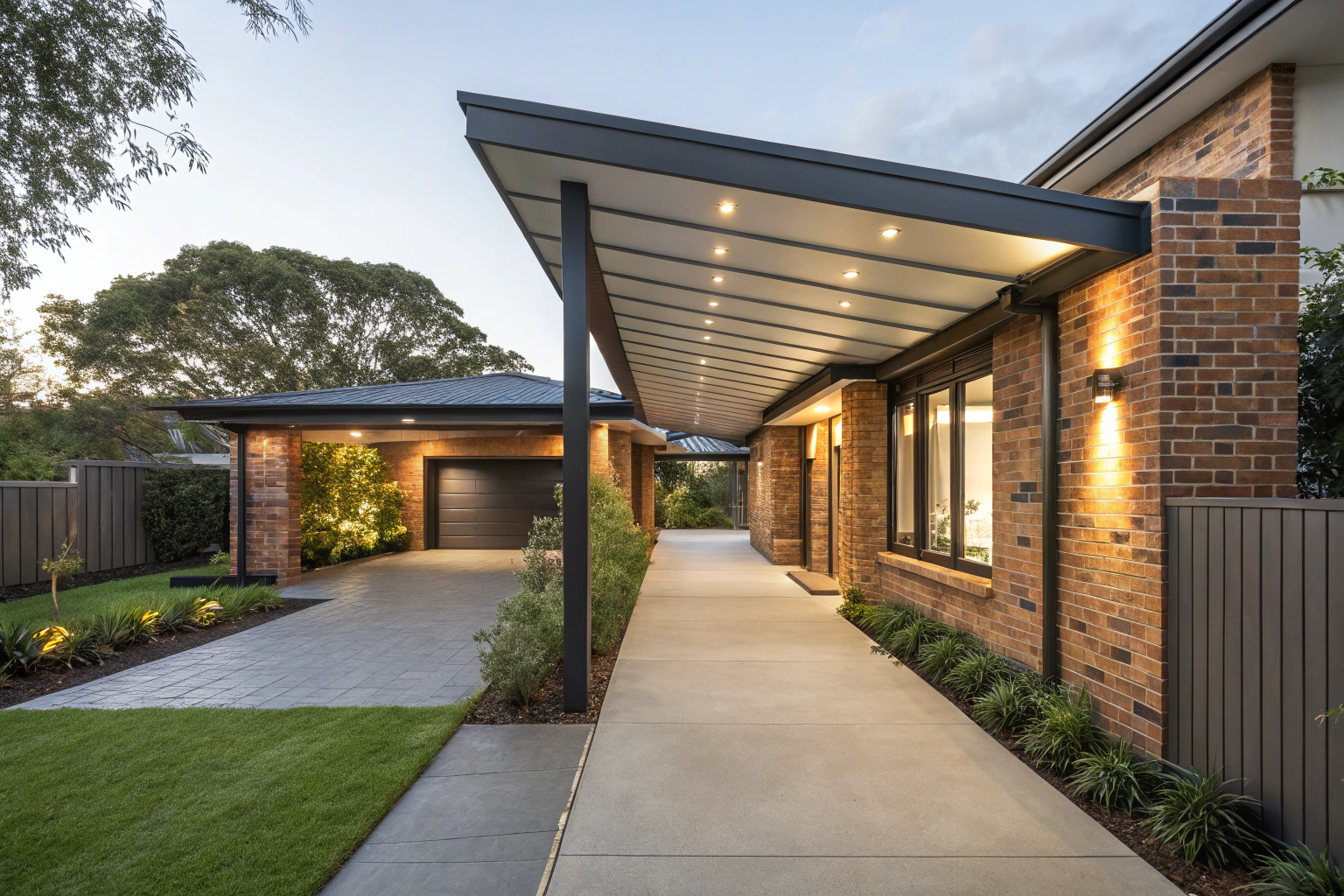
A covered walkway that’s been designed with integration in mind looks like it was always part of the property — not added years later as a functional fix. That means matching or complementing the roofline pitch of the existing structures, selecting materials that work with the home or building’s exterior finish, and positioning posts and beams so the walkway feels like a natural extension of what’s already there rather than a separate structure that happens to be attached.
In Newcastle’s residential market — where homes range from fibro cottages in the western suburbs to double-brick 1970s homes in Kotara and newer builds in Wallsend — that integration looks different from property to property. On a commercial site, it means a structure that holds up visually against the existing building fabric and meets the functional demands of the environment. We work through the design details on every job, so the finished walkway reads as part of the property, not an addition to it.
Site Considerations Before Construction Begins
No two covered walkway sites are the same, and the variables on the ground have a direct bearing on how the structure needs to be built. A site assessment before construction begins isn’t a formality — it’s what allows us to design a walkway that performs correctly from day one rather than developing problems down the track.
The key site factors we work through before construction begins include:
- Ground conditions — soil type and bearing capacity affect footing design, particularly on properties close to Newcastle’s coastline, where sandy or unstable ground requires a more considered approach
- Gradient changes along the walkway route that affect post heights, roofline pitch, and how level the finished structure sits
- Existing services — stormwater, electrical, and underground utilities that need to be located and worked around during footing installation
- Access to the site for machinery and materials, particularly on tighter residential blocks or built-up commercial sites
- Neighbouring structures and boundary setbacks that may affect where posts can be placed
Working through each of these before a single post goes in the ground is what keeps a project on time, on budget, and free of the kind of surprises that cost money to fix mid-build.
Drainage and Weather Performance
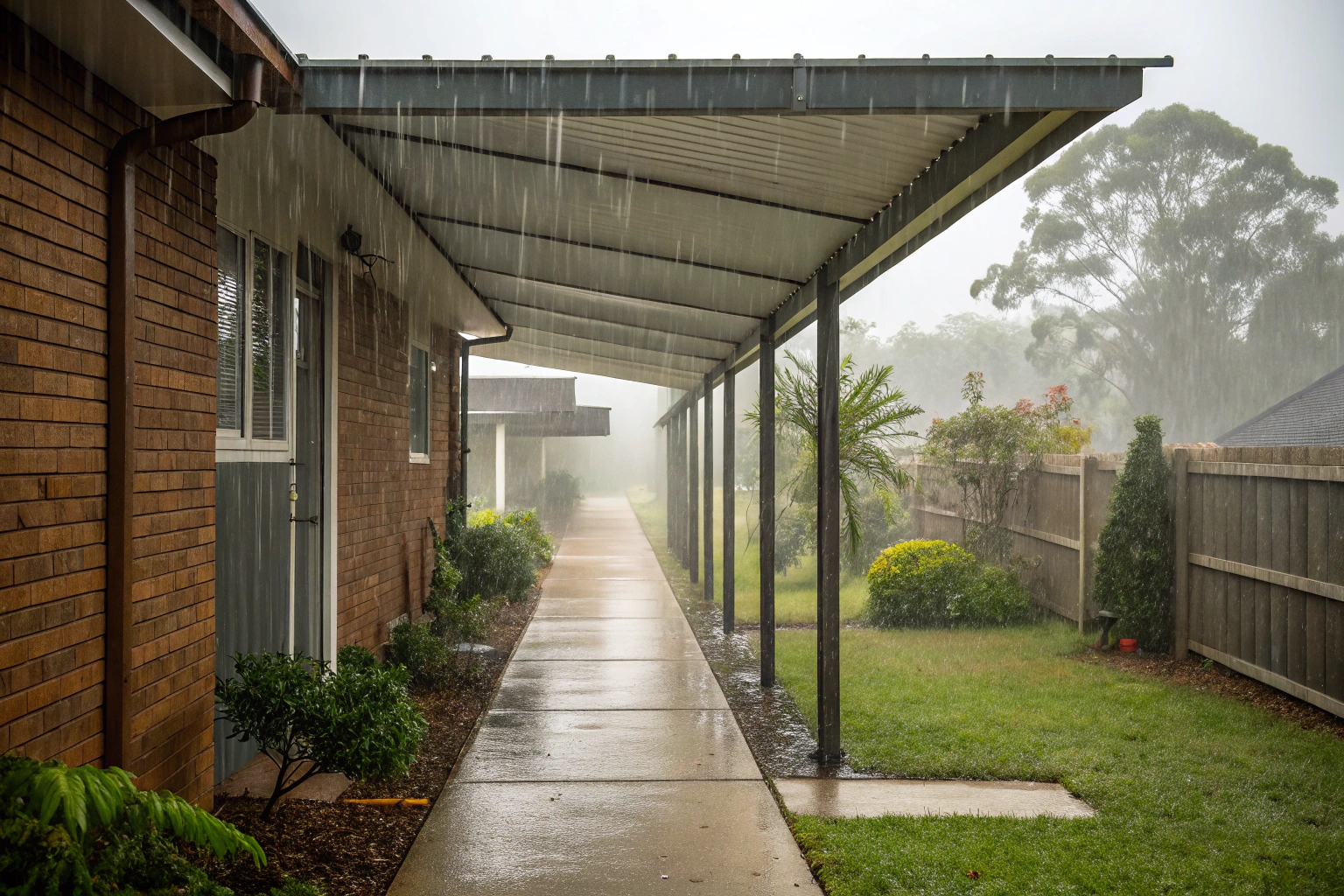
A covered walkway that doesn’t handle water correctly will cause problems — not just for the walkway itself, but for the buildings it connects. Roof pitch, gutter placement, and downpipe routing all need to be resolved as part of the design, not worked out on the day of installation. In Newcastle’s climate, where summer storms can deliver heavy rainfall in a short window, a walkway roof that sheds water toward an existing foundation or pools against a wall creates issues that compound over time.
We design every covered walkway with drainage as a primary consideration — establishing where water comes off the roof, where it goes from there, and how it’s directed away from both the walkway structure and the buildings at each end. On sites with existing stormwater infrastructure, we work the walkway drainage into what’s already there. On sites without it, we design a solution that handles the load and keeps water moving away from the structure in all conditions.
Frame Materials for Covered Walkways
The frame material you choose for a covered walkway affects how it looks, how long it lasts, and how much maintenance it needs over time. Each option has genuine advantages depending on the application and the property it’s going on.
Timber brings a warm, natural aesthetic that suits residential properties well, particularly older Newcastle homes where an aluminium structure would feel out of place. It takes stain and paint readily and can be detailed to match existing verandahs or outdoor structures on the property.
Aluminium is the low-maintenance option and particularly well-suited to Newcastle’s coastal conditions, where salt air accelerates corrosion in less durable materials. Powder-coated aluminium holds its finish over the long term with minimal upkeep and is available in a wide range of colours to match existing structures.
Steel becomes the right choice when wider spans are involved or when a heavier roofing system requires a frame with greater load capacity. It’s the go-to for commercial applications where the structure needs to perform under demanding conditions over many years.
Fixing Points and Heights on Existing Buildings
How a covered walkway attaches to the existing structures at each end is one of the most technically important decisions in the whole build. A fixing that’s undersized, poorly located, or installed into the wrong part of a wall or fascia will compromise the structural integrity of the walkway — and potentially cause damage to the building it’s attached to over time.
The key considerations we work through on every job:
- Wall and fascia construction — timber framing, brick, concrete block, and steel all require different fixing methods and hardware specifications
- Existing roof height at each building determines the pitch and clearance available for the walkway roofline
- Height mismatches between two buildings being connected often require a stepped or graduated design approach to maintain adequate headroom throughout
- Load transfer — the walkway roof carries dead load from its own structure and live load from wind and rain, and the fixing points into existing buildings need to be designed to handle both
- Weatherproofing at the junction between the walkway roof and the existing building wall or fascia, which needs to be properly flashed to prevent water ingress
We assess fixing requirements as part of every site visit and specify hardware and connection details before construction begins.
Structural Integrity Built Into Every Covered Walkway
A covered walkway is a permanent structure fixed to two existing buildings, exposed to weather year-round, and used daily. The structural engineering behind it matters more than it might appear from the outside. Every element — the footing design, the frame connections, the fixing points into existing buildings, and the roofing system — needs to be specified correctly for the span being covered and the loads the structure will carry.
Wind is the primary structural concern in Newcastle and the Hunter Region. A walkway roof acts as a sail in high wind events, and the connections at each end of the structure are where that load transfers. Undersized fixings or inadequate frame connections are where covered walkways fail — not gradually, but suddenly and expensively. We design every walkway to meet the wind load requirements for the Newcastle area and specify connection hardware accordingly.
The footing design matters equally. Posts need to be set into footings sized for the soil conditions on the specific site — what works on a stable clay base in Hamilton won’t necessarily work on sandy ground closer to the coast. We work through footing specifications as part of the site assessment so the structure performs correctly from the day it goes up.
Frequently Asked Questions
Construction time varies with complexity, but most residential covered walkways are completed within two to four days once materials are on site. Larger commercial builds take longer. Lead times from quote to construction depend on current scheduling and any approval requirements.
The three main options are Colorbond sheeting for full weather protection, polycarbonate panels where natural light along the walkway is desirable, and insulated panel systems for commercial applications where thermal performance matters. We’ll recommend the right option for your site.
Yes. Brick walls require specific fixing hardware and installation methods compared to timber-framed construction, but it’s a standard part of what we do. We assess wall construction during the site visit and specify the correct fixing approach before construction begins.
A pergola is typically an open-roof structure designed for an outdoor living area. A covered walkway has a fully weather-resistant roof and is designed specifically to connect two points on a property with continuous shelter. The structural intent and specification are different.
Yes, provided the right materials are specified. Powder-coated aluminium frames and Colorbond roofing are both well-suited to coastal environments. For properties in Merewether, Bar Beach, or Newcastle East, we recommend marine-grade specifications that hold up against salt air long-term.
Get a Free Quote for Your Covered Walkway in Newcastle
Whether you’re connecting two structures on a residential property or need a weather-protected path across a commercial site, we’re across both and ready to help. We service Newcastle and the Hunter Region — from Merewether and Hamilton to Wallsend, Charlestown, and everything in between. Every quote starts with a free on-site assessment where we look at the site, work through the design requirements, and give you a clear picture of what’s involved before you commit to anything. Call us or submit an enquiry online, and we’ll get a time locked in that works for you.