
How High Can a Deck Be Without Council Approval in NSW?
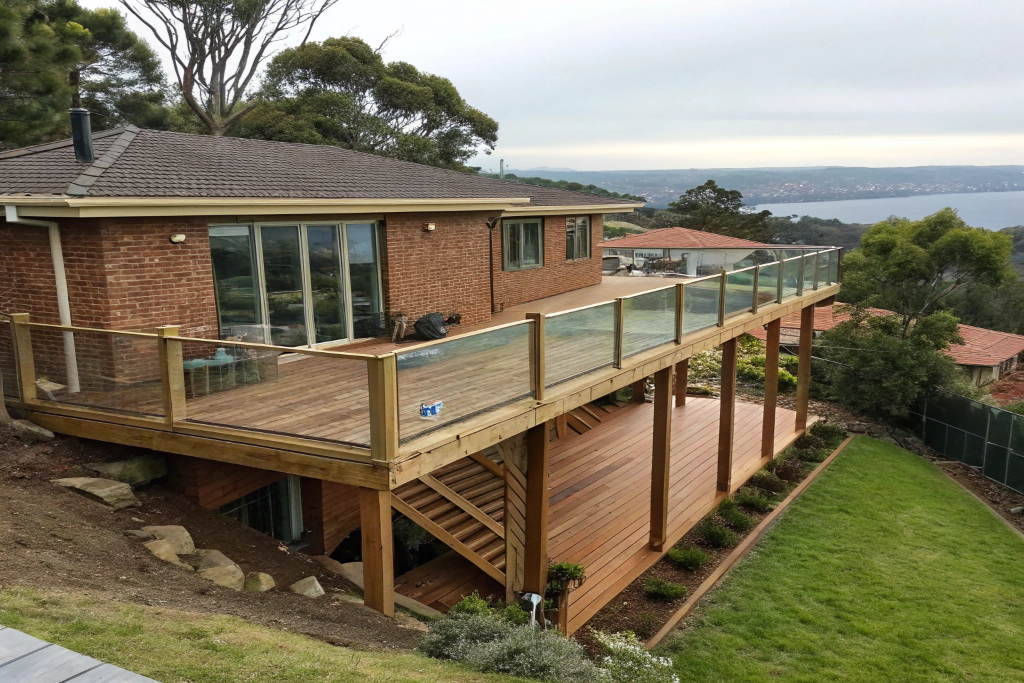
In NSW, a deck can be built as exempt development — without council approval — only if the floor level sits no more than 1 metre above natural ground level. Most elevated decks exceed this threshold, which means a Development Application is required.
To qualify as exempt development under the NSW Planning Portal, all of the following conditions must be met:
- Floor height: No more than 1m above natural ground level
- Overall structure height: Must not exceed 3m above ground level
- Deck area: Must not exceed 25 square metres
- Setbacks: Minimum 900mm from all property boundaries; must sit behind the building line
- Restrictions: Not permitted in heritage areas or on land with extreme slope
Because elevated decks by definition sit above the 1 metre threshold, most Newcastle homeowners in this category will require a DA. Newcastle Pergolas manages this process as part of the project scope — so you’re not left dealing with council on your own.

What Makes Elevated Deck Construction Structurally Different
A ground-level deck is relatively straightforward to build. An elevated deck is a different job altogether. The higher the structure, the more important every connection, every post, and every footing becomes. Here’s what changes when a deck goes up.
Why Elevated Decks Suit Newcastle’s Blocks and Home Configurations
Newcastle and the Hunter Region have a mix of housing and land that’s genuinely well-suited to elevated decks. Older inner suburbs like Hamilton, Islington, and Carrington have high-set homes where the living areas sit well above ground level. Hillside areas across the Hunter have sloped blocks where the yard drops away sharply from the back of the house. Coastal suburbs like Merewether and Bar Beach have homes positioned specifically to capture ocean views — views that a ground-level deck would never reach.
On sites like these, building at ground level either doesn’t connect to the home properly or puts you in the wrong position to enjoy the block. An elevated deck solves both problems. It meets the home at the right height, flows naturally from the living areas, and puts you where the view actually is.
If your block is flat and your home sits at ground level, a standard deck works fine. But for a large portion of Newcastle’s housing stock, elevated is simply the right way to build.
Footing Design and Site Conditions Across Newcastle
Elevated decks concentrate load onto fewer footings than a low-level deck. That makes footing design one of the most important parts of the job.
Soil Conditions in Newcastle and the Hunter Region
Newcastle’s soil varies across the region. Inland suburbs tend to have reactive clay that moves with moisture. Coastal areas are more likely to have sandy profiles, and some escarpment sites have rock close to the surface. Each condition calls for a different footing approach. We assess the site before specifying footings — not the other way around.
Footing Sizing, Depth, and Post Connections
These three elements work together. An undersized footing moves. A shallow footing won’t get below the reactive zone in clay soils. A poorly connected post introduces movement that works its way up through the whole deck. We specify based on actual site conditions and load requirements.
Timber and Composite Options for Elevated Decks
Material choice matters more on an elevated deck than a ground-level one. The underside of the deck is visible from the yard and neighbouring properties — so what’s up there is on show.
For traditional Newcastle homes, hardwood timber is the most popular choice. Merbau, Spotted Gum, and Blackbutt all suit the character of older inner-suburb homes and look the part at height. Composite suits homeowners who want low maintenance on a deck that’s harder to reach for upkeep — no oiling, no sanding, consistent colour over time.
For the subframe, treated pine is standard. On taller builds, steel subframes are increasingly the better call — steel carries greater loads across longer spans without the bulky timber section size, which keeps the underside looking cleaner.
We build in both timber and composite across Newcastle and the Hunter Region. Happy to walk you through what suits your home and block.


Balustrades, Safety Compliance, and View Preservation
Balustrades are one of the biggest design decisions on an elevated deck — affecting safety, appearance, and how much of the view you actually get to enjoy.
NCC Compliance Requirements
Under the National Construction Code, any deck more than 1 metre above ground requires a compliant balustrade:
- Minimum rail height of 1 metre
- Openings no greater than 125mm to prevent child entrapment
- Must withstand specified horizontal load requirements
Balustrade Options
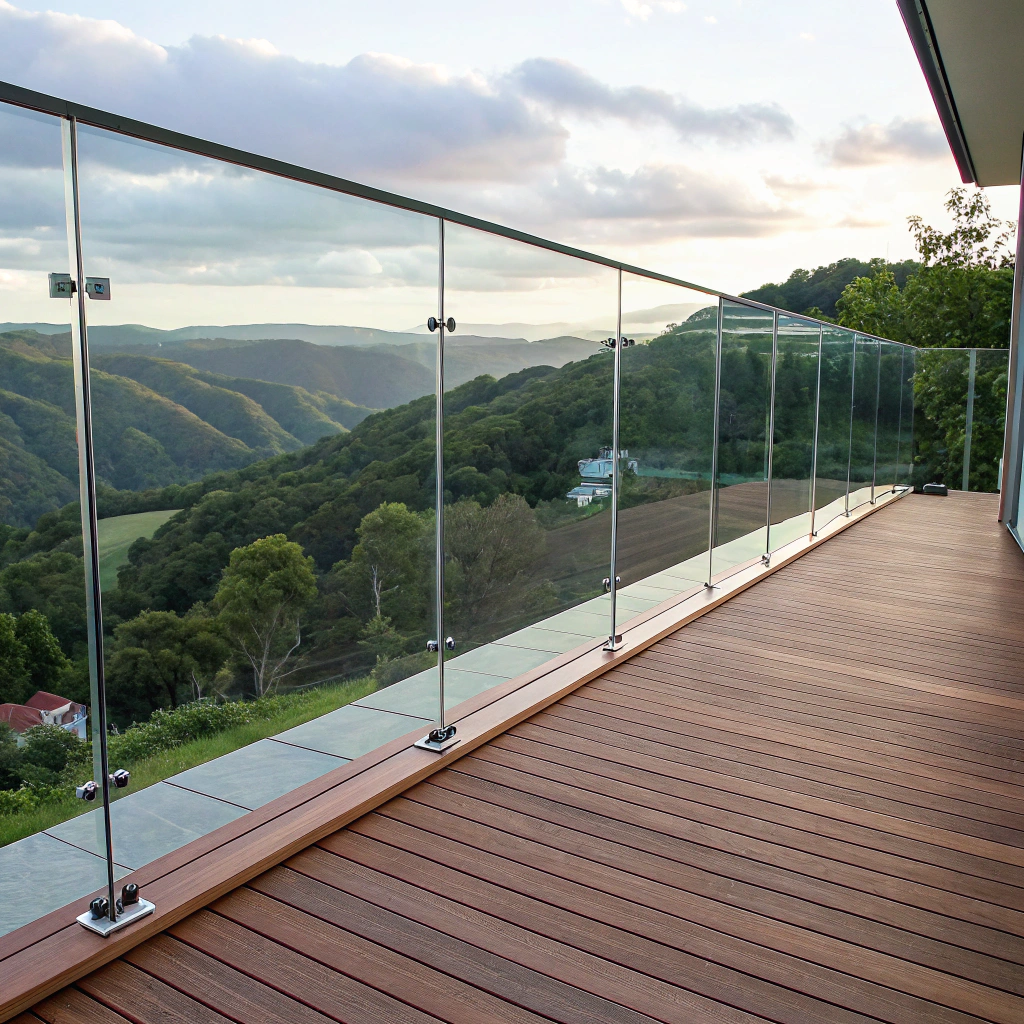
Three main directions most Newcastle homeowners go. Timber with vertical balusters suits traditional homes. Aluminium and steel slim-profile systems suit contemporary builds and are low maintenance. Frameless or semi-frameless glass suits view sites where the outlook is the whole point.
Glass Balustrades for View Sites
For elevated decks in Merewether, Bar Beach, or anywhere with a coastal outlook, glass makes a genuine difference. It keeps the view open from a seated position and removes the visual interruption of vertical balusters.
Stairway Design and the Space Beneath
Two things that often get left until late in the design process — and shouldn’t be.
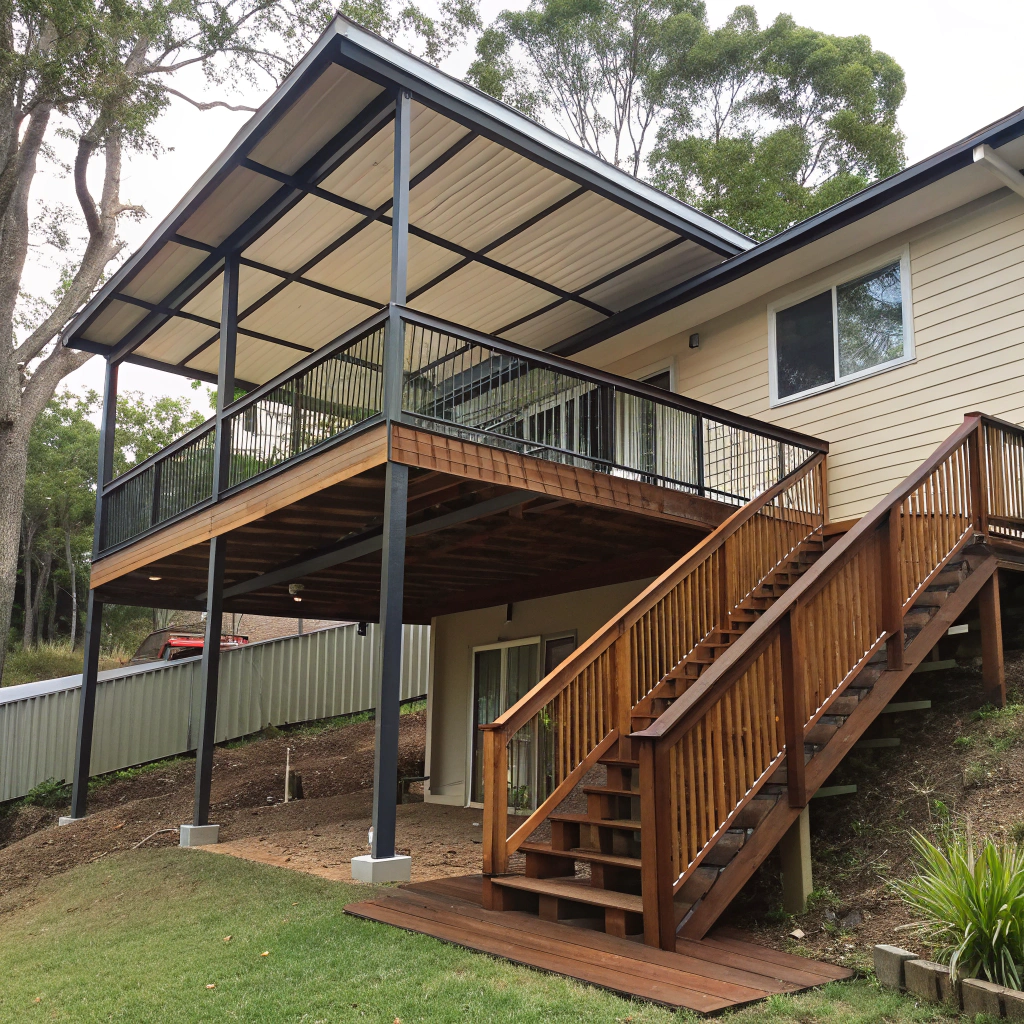
Stairway Design for Elevated Decks: A significantly elevated deck needs more than a short flight of steps. Depending on the height, you may need multiple flights with an intermediate landing. Under the NCC, stairways have specific requirements for rise, going, and handrail height that have to be met. Beyond compliance, stairway positioning affects how the deck looks from the yard and how people move through the space beneath. It’s worth thinking through early — not as an afterthought once the deck is built.
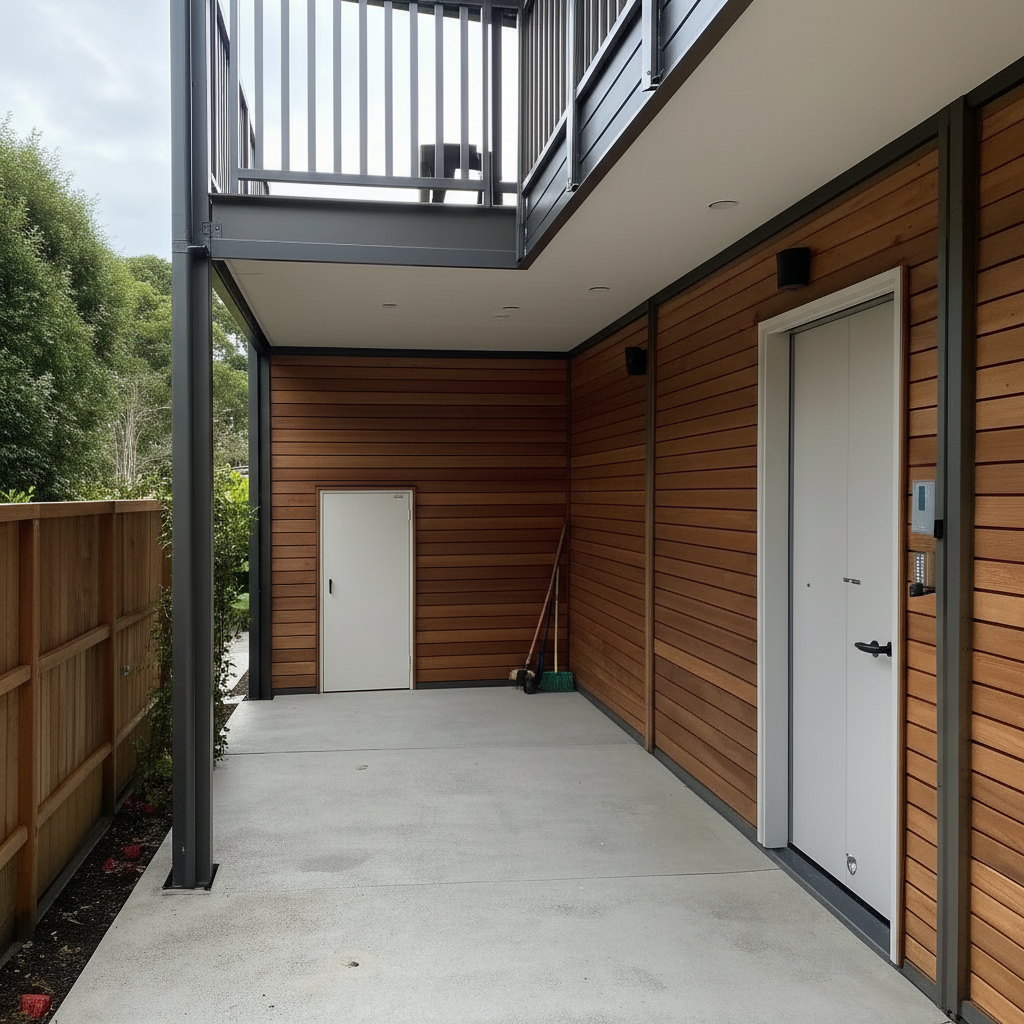
Making Use of the Under-Deck Space: The void beneath an elevated deck is usable space that most homeowners don’t think about during the design phase. With some planning it can become storage, a workshop, a covered outdoor area, or a fully enclosed utility space with cladding and access. At Newcastle Pergolas, we make this part of the design conversation from the start — because once the deck is built, retrofitting the space underneath is a much harder job.
Council Approval for Elevated Decks in Newcastle
As covered earlier, most elevated decks in Newcastle will require a Development Application. The DA process involves submitting documentation to Newcastle City Council that typically includes:
- A site plan showing the deck position and setbacks
- Structural drawings and engineer certification
- Shadow diagrams where required
- A BASIX or planning statement depending on the site
The process takes time and needs to be factored into the project timeline from the start. The good news is that it’s manageable when you know what’s required — and Newcastle Pergolas handles the approval process as part of the project scope. You don’t need to deal with council directly or figure out what documentation is needed.
If you’re not sure whether your deck needs a DA, ask us about managing your council approval as part of your build. We know Newcastle City Council’s requirements and we factor approval timing into every elevated deck project we take on.
Frequently Asked Questions
In most cases, yes. If your deck floor sits more than 1 metre above natural ground level, it falls outside exempt development and requires a Development Application. We handle this process as part of the project scope.
Elevated decks cost more than ground-level builds because of the additional structural work involved — posts, bracing, footings, and balustrades all add to the scope. Every site is different, so we price based on your specific block and home configuration after an on-site assessment.
Build time depends on the size and complexity of the deck. Most elevated deck projects run between two and four weeks on site, not including the DA approval period if one is required.
For homes in coastal suburbs like Merewether, Bar Beach, and Newcastle East, we typically recommend composite decking or naturally durable hardwoods like spotted gum and blackbutt. Salt air accelerates deterioration in lower-grade materials, so getting the specification right from the start makes a significant difference to how long your deck lasts.
A well-built hardwood timber deck, properly maintained, can last decades. The key variables are material selection, quality of construction, and ongoing care — particularly oiling on a regular schedule. We use timbers suited to Newcastle’s conditions and build to a standard that protects that investment over the long term.
We most commonly work with Merbau, Spotted Gum, and Blackbutt. Each is a hardwood species that handles the outdoor environment well and looks the part on a high-set build.
Yes. Sloped blocks are exactly what elevated decks are designed for. We assess the slope, the soil conditions, and the home configuration before specifying the structure — steeper sites just require more detailed footing and post design.
Most do, yes. Because elevated decks exceed the thresholds for exempt development, structural drawings and engineer certification are typically required as part of the DA documentation. We coordinate this as part of the approval process.
Ready to Build Your Elevated Deck?
An elevated deck is not a standard build. It needs someone who understands the site, the slope, and how the structure connects to your home before a design can even be drawn up.
Get Your Free On-Site Elevated Deck Consultation
Every elevated deck project with Newcastle Pergolas follows the same straightforward process:
- Book your free on-site consultation
- Receive your custom elevated deck design and quote
- We manage approvals and build to schedule