
Why a Freestanding Pergola Works Better on Some Newcastle Blocks
Newcastle’s housing stock is varied — and that variety matters when you’re planning an outdoor structure. A 1970s brick home in Kotara with a narrow side access and a rear-loaded yard sits completely differently from a weatherboard cottage in Hamilton or a newer build in Wallsend with a wide, open backyard. Not every block is set up for an attached pergola, and pushing one onto a home that doesn’t suit it rarely ends well.
A freestanding structure solves a lot of layout problems. If your back wall is already occupied by doors, windows, or an existing awning, a tie-in just isn’t practical. If the best aspect of your block is at the far end of the yard rather than directly behind the house, an attached pergola puts the structure in the wrong place entirely. And if you want a dedicated outdoor zone — a pool cabana, a garden retreat, a separate entertaining area — a freestanding design gives you that separation by intent, not by compromise.

Where Freestanding Pergolas Fit Best
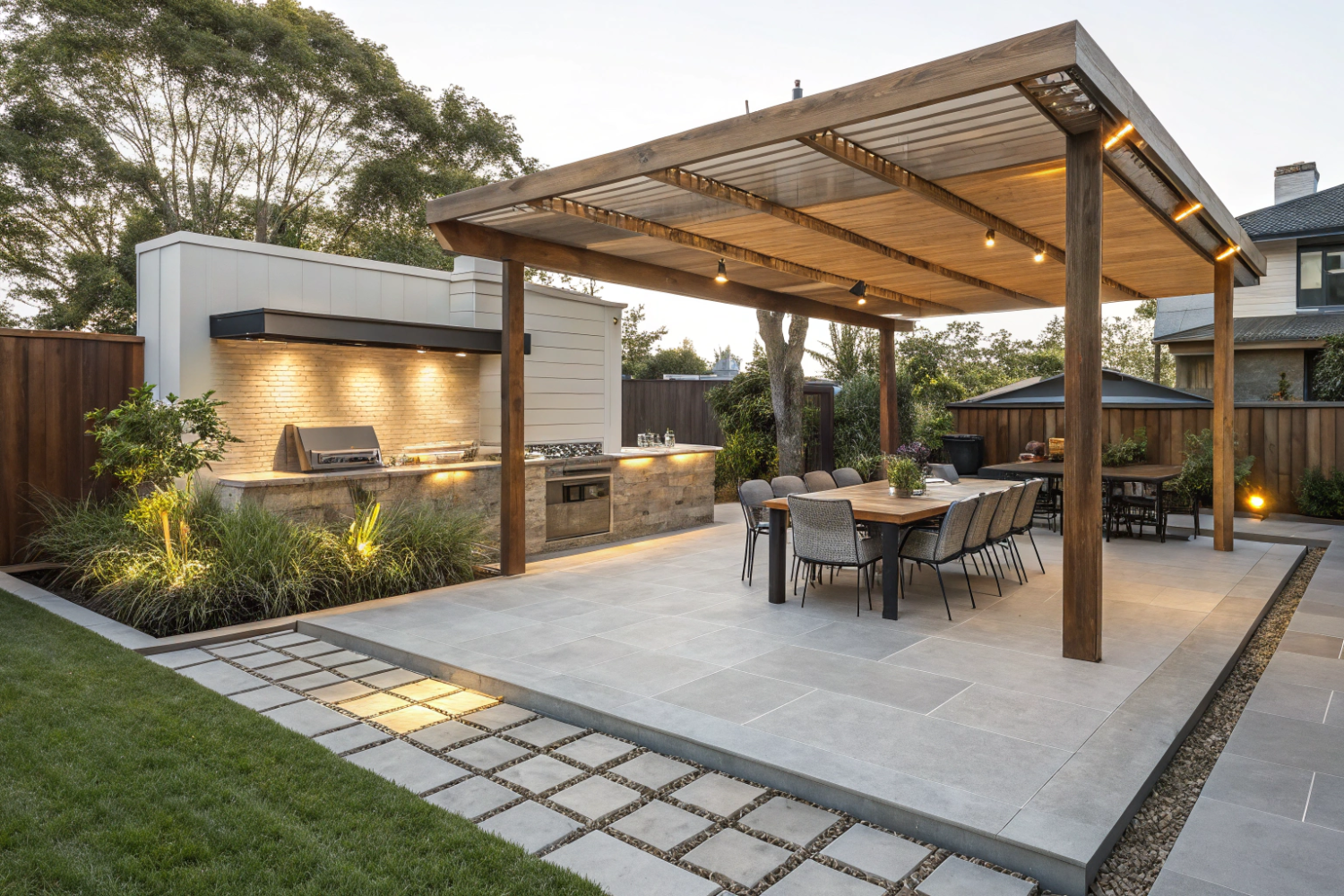
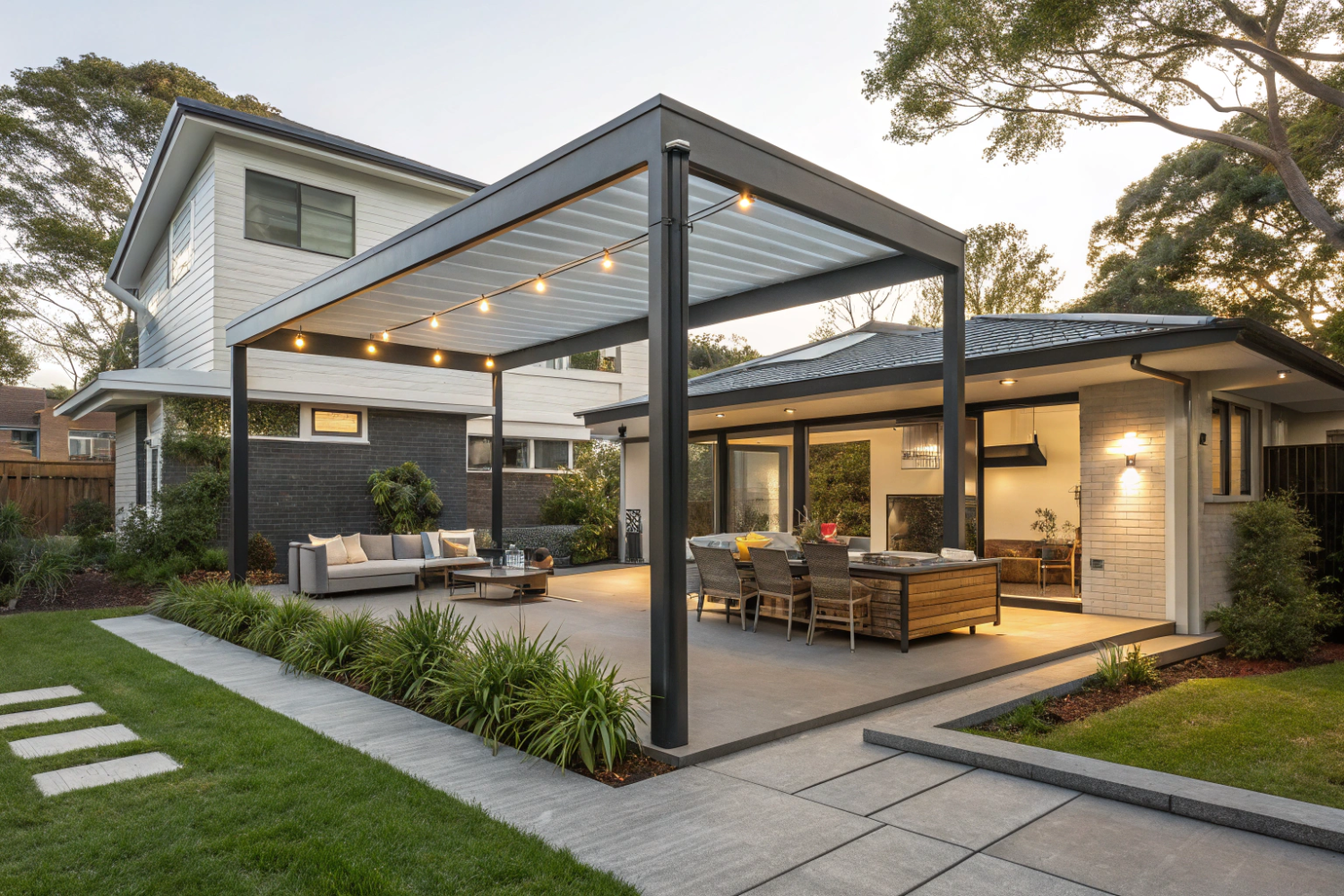
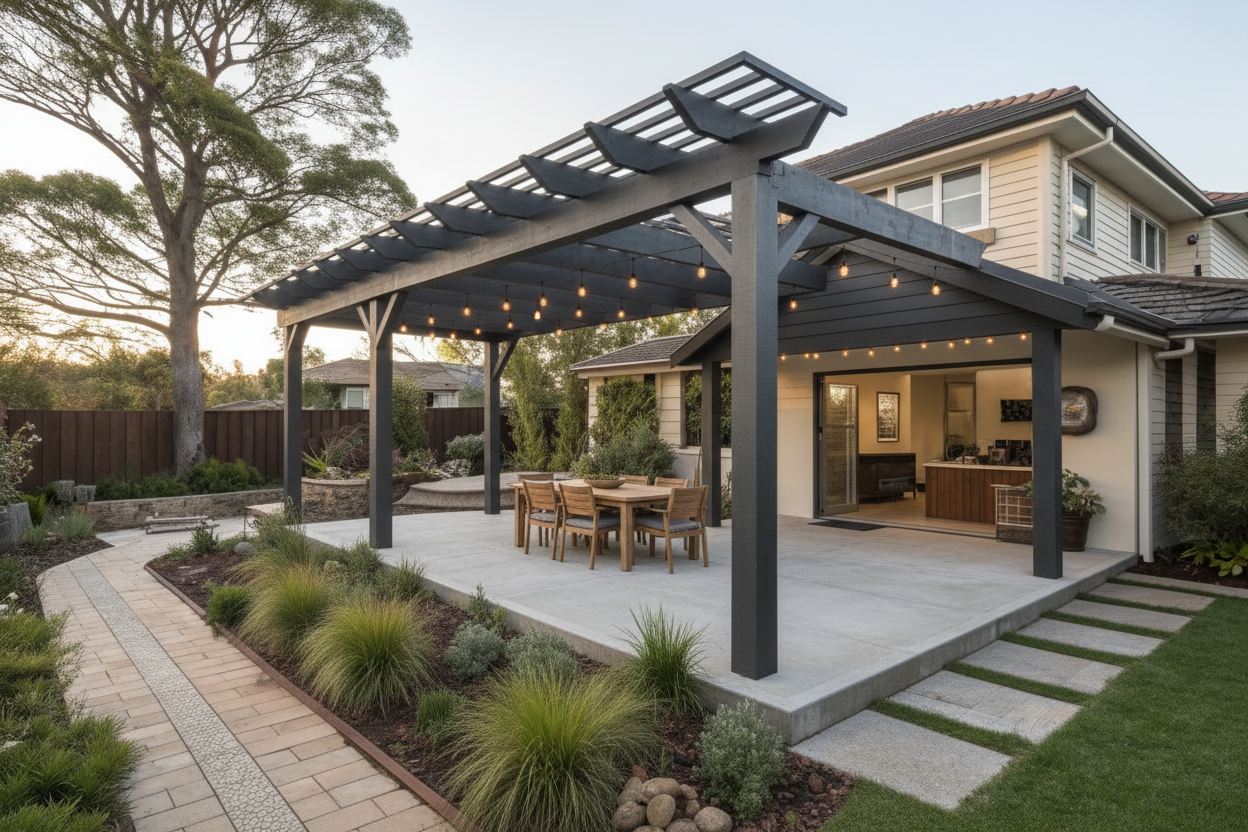
Not every outdoor space is designed around the back wall of the house — and for a lot of Newcastle homeowners, that’s exactly the point. A freestanding pergola gives you the freedom to put the structure where it actually makes sense for your block, your lifestyle, and the way your yard flows. Whether the best aspect of your property is at the far end of a generous lawn, beside a pool, or in a corner that the existing home layout simply can’t reach, a freestanding design puts the entertaining space where it belongs — not where it’s most convenient to bolt something onto the wall. These are the situations where a freestanding build consistently delivers the right outcome.
- ✔
Over a pool or spa — frames the pool edge as a proper outdoor room without touching the home’s roofline or interrupting internal flow.
- ✔
At the rear of a large block — creates a genuine destination at the back of the yard, turning one undivided lawn into two distinct outdoor spaces.
- ✔
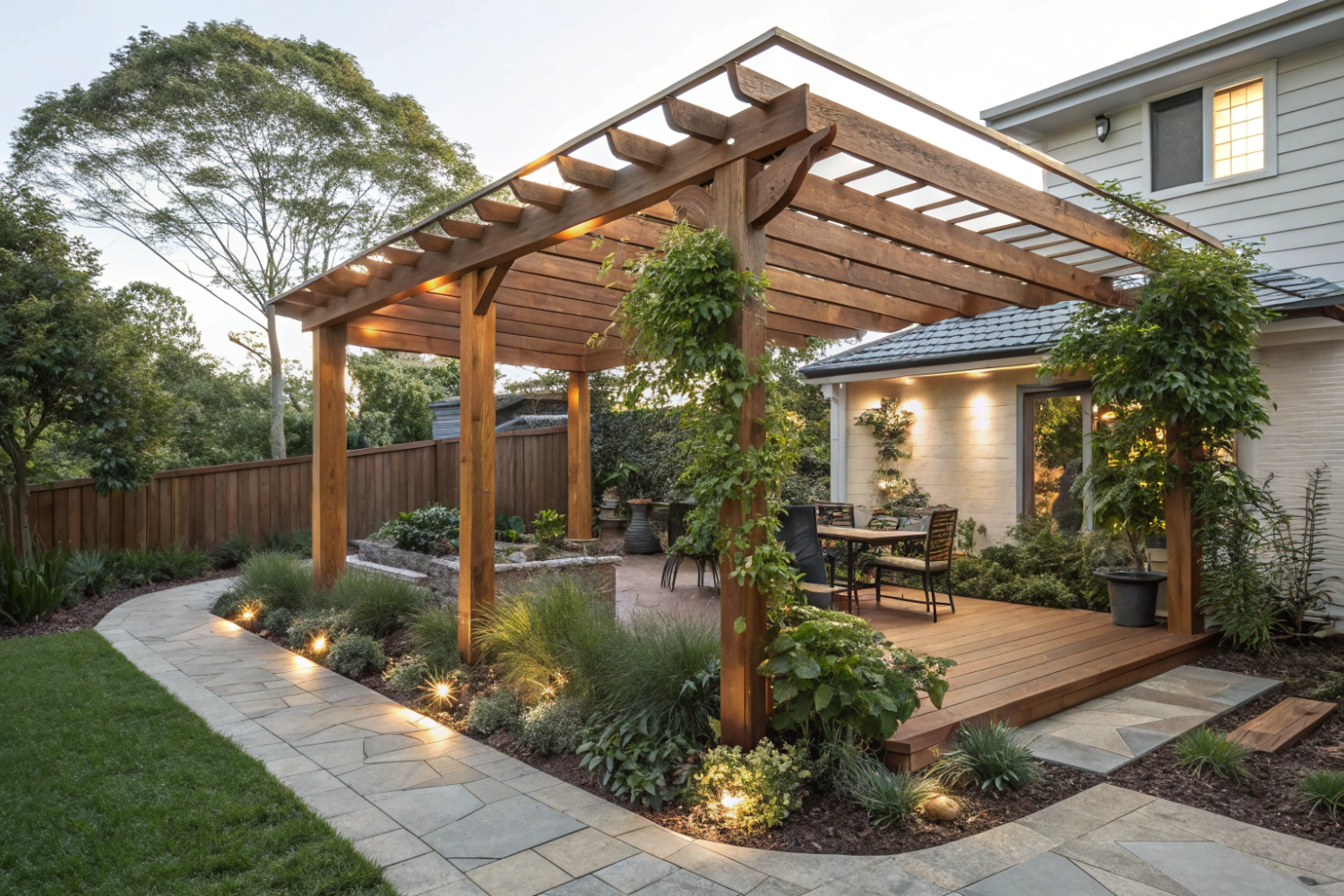
As a garden retreat, a freestanding structure tucked into a planted corner of the yard works as a quiet, separate retreat entirely removed from the main living areas.
- ✔
Where the home layout doesn’t allow a tie-in — existing awnings, windows, rooflines, or pergolas that make an attached structure impractical or visually awkward.
- ✔
On corner blocks — where side-yard space is generous, and the best outdoor aspect sits well away from the rear of the dwelling.
- ✔
As a dedicated entertaining zone, homeowners who want a clear separation between the indoor-outdoor flow of the home and a standalone outdoor room benefit from the deliberate distance a freestanding structure creates.
Design Flexibility You Don’t Get With an Attached Structure
An attached pergola is constrained from the moment design starts. It has to work with the home’s existing wall heights, roofline pitch, and structural tie-in points — and those constraints shape everything that follows. A freestanding pergola starts with a blank page.
Because the structure carries its own load and sits independent of the home, the design can go in directions an attached build simply can’t:
- Larger footprints — no wall width or fascia height limiting the span
- Higher clearance — post heights set for the space, not dictated by the eave line
- Multi-bay configurations — two or three bays joined to create a genuinely substantial outdoor room
- Positioning for aspect — placed exactly where the block performs best, not where the house happens to end
That last point matters more than most people realise before they start planning. A pergola oriented to catch Newcastle’s afternoon coastal breeze while cutting the harsh western sun creates a space that’s genuinely comfortable through summer. One placed without that consideration just sits there looking the part.
We bring local knowledge of Newcastle’s sun angles, prevailing winds, and block orientations to every design conversation.
Custom Timber Freestanding Pergolas Newcastle
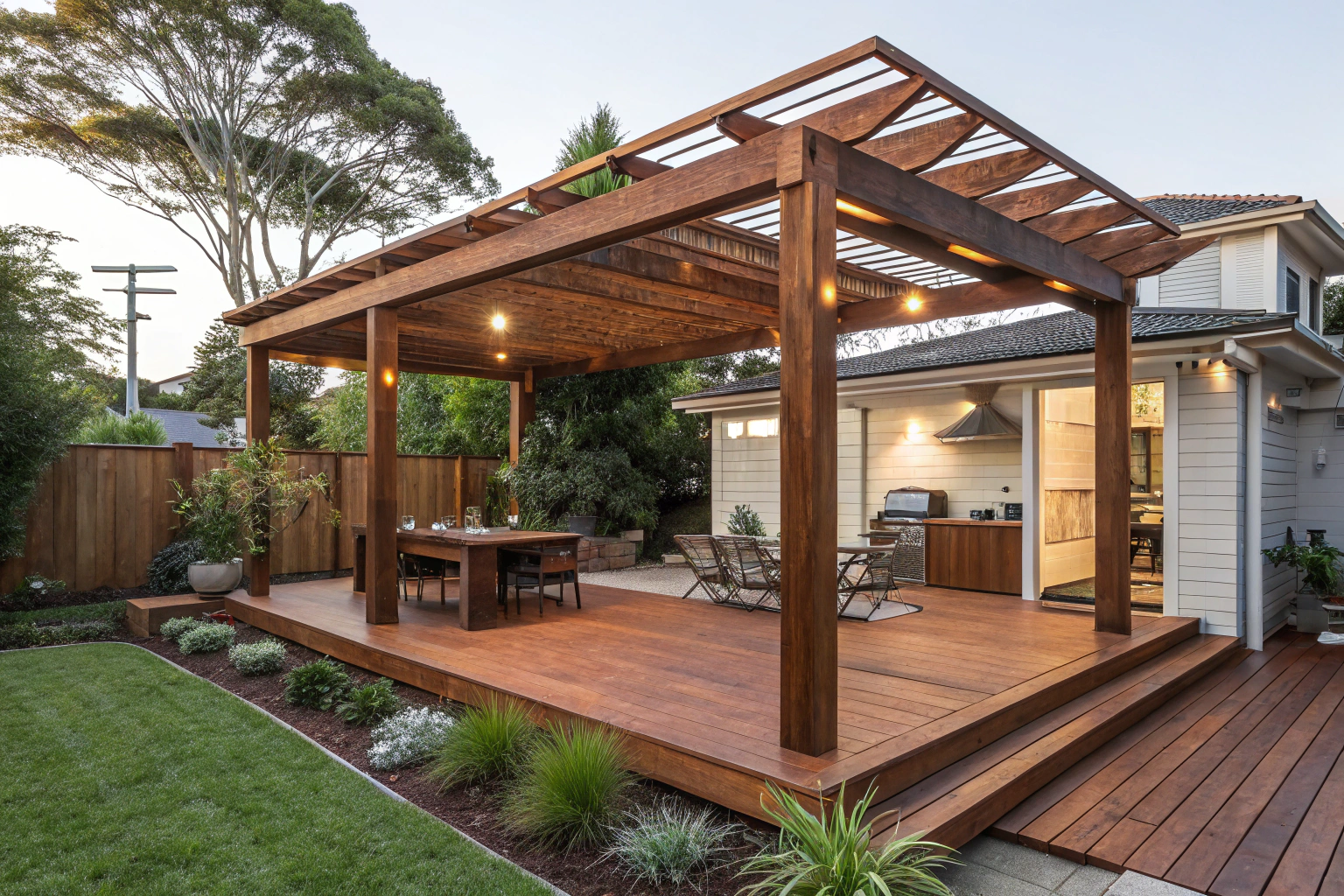
There’s a reason timber remains the material that many Newcastle homeowners come back to. It brings warmth and character to an outdoor space that steel and aluminium don’t replicate — and in a garden setting, or positioned away from the home as a retreat or entertaining destination, that quality matters.
A custom timber freestanding pergola suits lifestyle-focused applications particularly well. The natural texture of hardwood beams, the weight and presence of a well-proportioned timber frame, the way it settles into a planted yard rather than imposing on it — these are things you notice every time you use the space.
We work with treated pine and hardwood timber species suited to Newcastle’s climate conditions. For homeowners close to the coast, timber selection and treatment matter — we spec accordingly rather than leaving that conversation until after something’s gone wrong.
If the aesthetic of your outdoor space matters as much as the function, a custom timber build is worth the conversation.
Roofing and Cover Options for Freestanding Pergolas
Insulated Roof Panels
Insulated panels are the premium roofing choice for year-round usability. The panel construction keeps the space cooler in summer and noticeably warmer in winter, making the pergola genuinely comfortable across all seasons rather than just the mild ones. For homeowners who want a fully enclosed outdoor room that functions as an extension of the home’s living space, insulated panels deliver that outcome better than any other roofing option on this list.
Polycarbonate Sheeting
Polycarbonate lets light through while still providing rain protection — a combination that works well over pool pergolas or garden structures where natural light is part of the appeal. Modern polycarbonate carries UV filtration, which takes the edge off the harsh summer sun without fully blocking it. It’s a practical mid-point between an open beam design and a solid roof, and suits applications where the outdoor space benefits from a bright, open feel.
Open Beam Design
An open beam structure provides shade, definition, and architectural presence without a full weather enclosure. It’s the most traditional pergola form and still one of the most versatile — climbing plants, shade cloth, and outdoor blinds can all be added over time to adjust the level of cover. For a garden retreat or a space where the connection to the sky matters, an open beam freestanding pergola is often the right answer.
Footings and Site Preparation — Why It Matters on a Freestanding Build
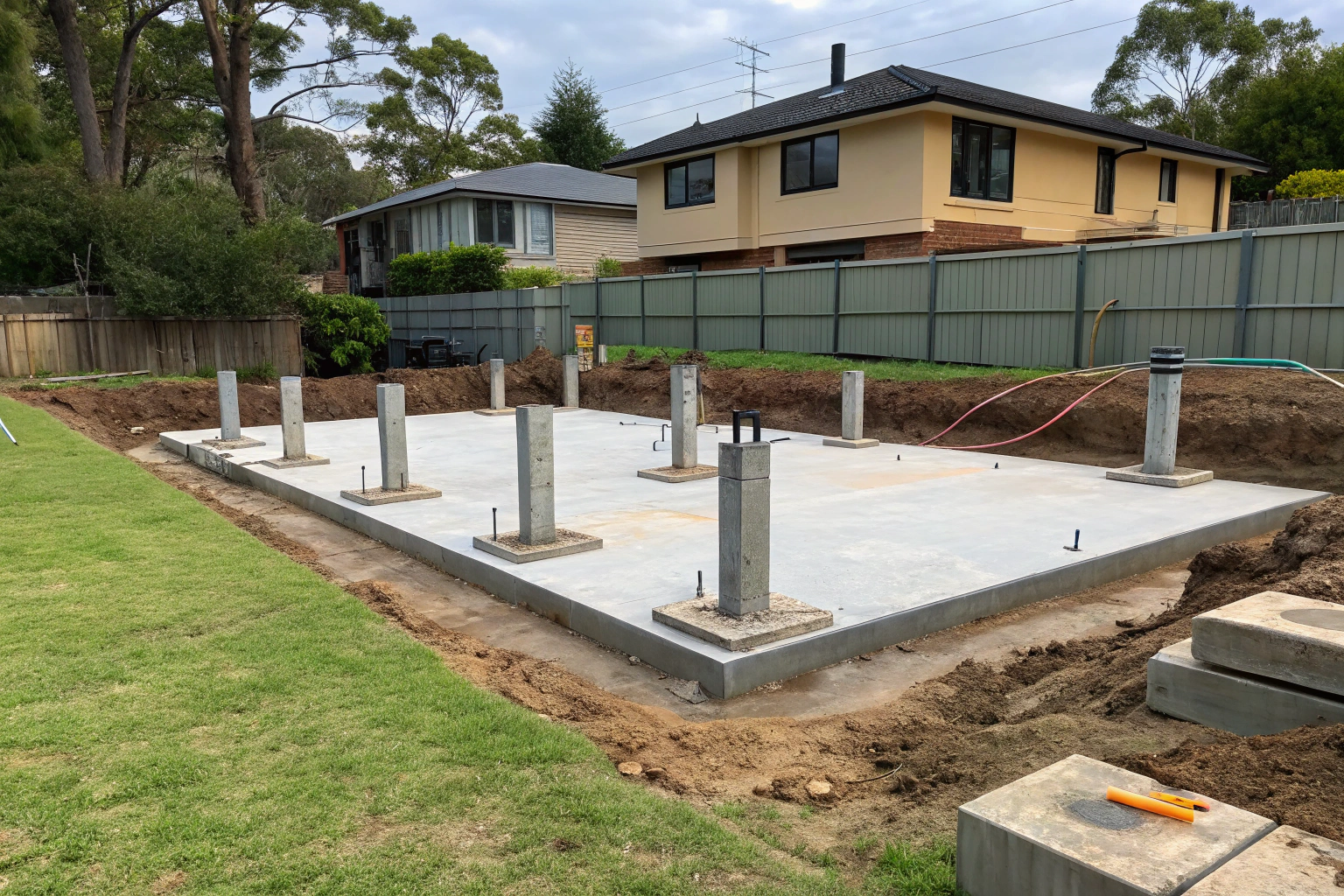
A freestanding pergola carries its entire load on its own posts and footings. There’s no home wall sharing that load, no existing structure to lean on — every kilogram of roof, frame, and wind load transfers directly through the posts and into the ground. Getting the footings right isn’t a detail; it’s the foundation the whole build sits on.
Footing specification depends on post sizing, roof weight, span, and — critically — the soil conditions on your specific site. Newcastle and the Hunter Region cover a wide range of ground conditions. Coastal sandy soils in Merewether and Bar Beach behave differently from the heavier clay profiles found further inland toward Maitland and Cessnock. A footing depth and diameter that works on one site may be completely inadequate on another.
We assess every site properly before specifying the structure. No assumptions, no one-size-fits-all footing schedule applied regardless of what’s actually in the ground.
Freestanding vs Attached Pergola — Which One Is Right for Your Block?
| Freestanding Pergola | Attached Pergola |
|---|---|
| A freestanding pergola goes where your block performs best — not where the home’s back wall happens to be. If the ideal spot is at the rear of a generous yard, beside the pool, or in a corner that catches the afternoon coastal breeze, a freestanding structure gets you there. For blocks where the best aspect and the back of the house aren’t in the same place, this is the configuration that makes sense. | An attached pergola connects directly to the home and extends the indoor living space outward. It works best when the back of the house faces the right direction and the transition from inside to outside is the priority. For homeowners who want the outdoor space to feel like a natural continuation of the kitchen or living room, an attached structure delivers that flow better. |
| Because it ties into nothing, a freestanding structure can be designed with genuine freedom — larger spans, greater height, multi-bay configurations, and positioning purely based on aspect and usability rather than the home’s existing roofline or wall heights. | An attached pergola works within the existing geometry of the home. For most standard Newcastle suburban builds, those constraints are manageable, and an experienced builder delivers a clean, proportionate result without structural complications. |
Freestanding Pergola Sizes — What Works for Newcastle Backyards
Size decisions on a freestanding pergola come down to three things: how you plan to use the space, what the block allows, and what the roofing system requires structurally. There’s no universal right answer, but there are common configurations that consistently work well across Newcastle’s residential blocks.
| Configuration | Typical Size | Best For |
|---|---|---|
| Single Bay | 3m x 3m to 4m x 4m | Garden retreat, pool shade, compact yards |
| Standard Entertaining | 4m x 5m to 5m x 6m | Outdoor dining, lounge area, family use |
| Large Entertaining | 6m x 6m to 6m x 9m | Multi-zone outdoor rooms, larger blocks |
| Multi-Bay | Custom spans | Pool cabanas, commercial, acreage properties |
Ceiling height is equally important. A freestanding pergola with low clearance feels enclosed regardless of footprint size. For most residential applications across Newcastle, a finished height of 2.7m to 3.2m delivers the right balance of proportion and comfort.
Every site gets measured properly. Recommended sizes are starting points — the final specification is always driven by your block.
Frequently Asked Questions
Depending on size, height, and proximity to site boundaries, a freestanding pergola may require development approval through Newcastle City Council. We’re across local requirements and manage the approval process where needed.
Pricing varies depending on size, material, roofing system, and site conditions. A timber open beam structure sits at a different price point to a fully roofed aluminium build. We provide detailed quotes after an on-site assessment.
An attached pergola connects directly to the home’s wall or fascia. A freestanding structure is fully self-supporting and can be positioned anywhere on the block, independent of the home’s roofline or wall heights.
We build in timber, aluminium, and steel. Each material suits different applications — timber for warmth and character, aluminium for coastal durability and low maintenance, steel for larger span configurations requiring greater structural capacity.
Yes — pool pergolas are one of the most popular freestanding applications we build across Newcastle. Positioning, post placement, and material selection are all considered carefully around pool environments and council setback requirements.
Get a Free On-Site Design Consultation and Quote
If you’ve got a clear idea of where you want a freestanding pergola on your block — or you’re still working through the options — the best next step is a conversation on site. We come to you, look at the block, talk through the aspect, the materials, the roofing, and what the space actually needs. No assumptions made from a phone call.
We build across Newcastle and the Hunter Region — Merewether, Hamilton, Charlestown, Kotara, Warners Bay, Wallsend, and everywhere in between.
Call us today or fill in the enquiry form to lock in your free on-site consultation. The outdoor space you’ve been planning deserves to be built properly.